
How to Bid on South Korea Government Tenders in 2026

South Korea, with its dynamic economy and commitment to technological advancement, represents a significant, yet often overlooked, opportunity for international businesses in the public procurement space. Navigating the intricacies of South Korean government tenders and understanding the local bidding rules can seem daunting at first glance. However, with the right approach and a clear understanding of the established protocols, companies worldwide can successfully participate in this lucrative market. As an experienced journalist covering international procurement for over 15 years, I've seen firsthand how crucial it is to demystify these processes for bid managers, export specialists, and government officials alike.
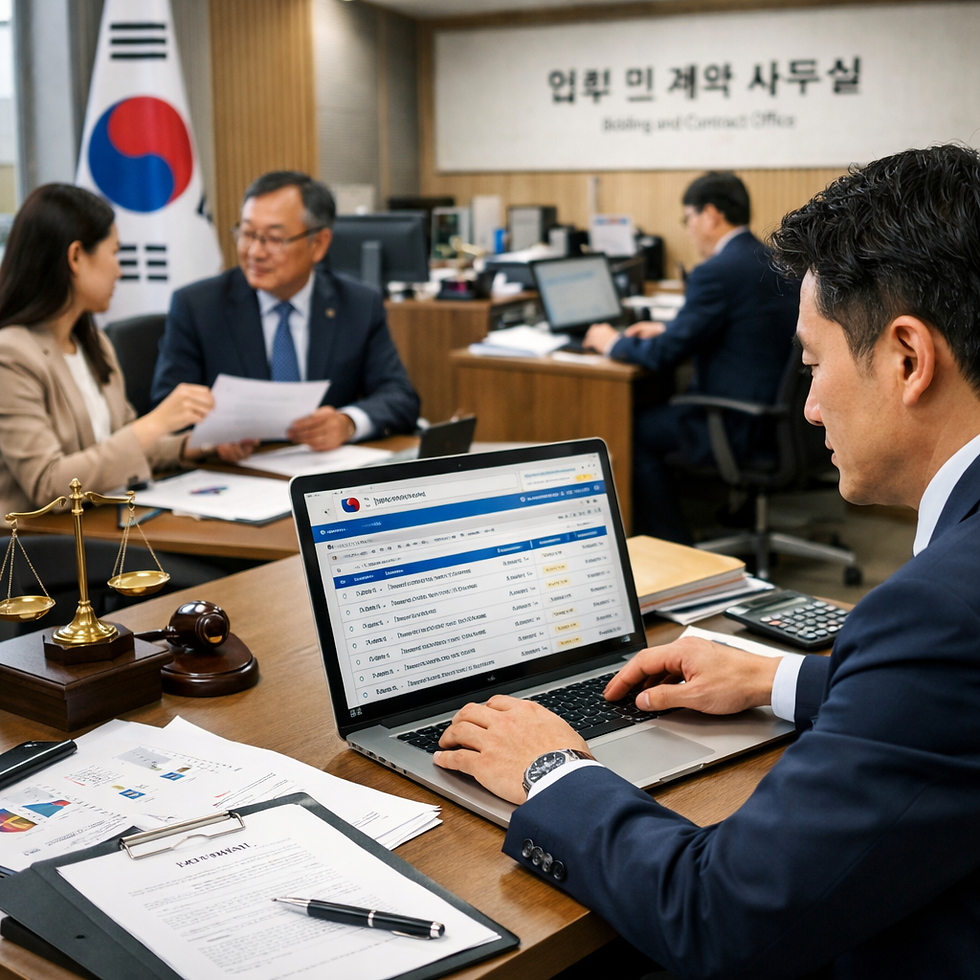
For those looking to engage with Korean public procurement, the journey inevitably leads to KONEPS, the Korea ON-line E-Procurement System. This system isn't just another online portal; it's the mandatory backbone of South Korea's public purchasing, designed to centralize and streamline the entire procurement lifecycle. Let's delve into how you can position your company to bid effectively on these tenders in 2026.
The Centrality of KONEPS: Your Gateway to South Korean Tenders
When we talk about South Korean government tenders, we are, almost without exception, talking about KONEPS. Operated by the Public Procurement Service (PPS), KONEPS is not merely a platform; it is the single-window system mandated for all Korean central and local government agencies. This means that over 60,000 institutions are required to conduct their public procurement activities through this very system. From initial procurement information dissemination to bid submission, contracting, and even payment processing, KONEPS handles it all.
For international firms, understanding KONEPS is not optional; it's fundamental. The PPS explicitly states that international bid invitations for Korean public agencies are viewable on KONEPS at www.koneps.go.kr . This is your primary entry point for identifying opportunities. While other platforms might exist for specific sectors, KONEPS remains the authoritative source for the vast majority of national tenders. Think of it as the central nervous system for all public sector buying in South Korea.
One common query I receive is about finding relevant tenders. The PPS outlines a straightforward search mechanism: you can search by date, commodity, or agency name. If you're not sure of the exact name, a keyword or keyword* search can prove incredibly useful. This flexibility is a small but important detail that can save considerable time during your opportunity scouting. For companies not yet registered on KONEPS, exploring the public search functions is an excellent first step to gauge the market and identify potential opportunities before committing to the full registration process.
Registering and Preparing for Bid Submission
Before you can submit a bid, you must be properly registered on KONEPS. While the system is designed for broad access, the registration process for foreign entities can require careful attention to detail. This typically involves submitting company registration documents, official representative details, and potentially proof of financial standing. It's advisable to start this process well in advance of any tender you intend to pursue, as verification can take time.
Electronic bid submission is the standard for most tenders, as evidenced by recent 2026 deadlines. For instance, a PPS tender notice showed an electronic bid submission deadline of 10:00 KST on April 28, 2026, while another had a deadline of 12:00 KST on April 17, 2026. These precise deadlines underscore the need for meticulous planning and timely execution. Missing a deadline, even by a minute, means your bid will not be considered. Always factor in potential technical glitches or time zone differences when planning your submission.
One particular technicality worth noting is the document format. The PPS explicitly states that some documents are in HWP format, requiring the Hancom viewer. This is a proprietary Korean word processing format, and failing to have the correct software could hinder your ability to review critical tender documents. Ensure your technical team is prepared to handle such formats, or identify a local partner who can assist. These seemingly minor details can often be the difference between a successful bid and a missed opportunity.
Understanding South Korea's Procurement Landscape and Priorities
Beyond the procedural aspects, understanding the broader context of South Korean procurement priorities is vital. The government's procurement strategy often reflects its national development goals. For example, recent data from February 2026 revealed that South Korea’s government procurement of AI-related goods and services totaled a remarkable 409.3 billion won through the Nara Marketplace portal. This figure alone speaks volumes about the country's commitment to technological advancement and its willingness to invest significantly in areas like artificial intelligence.
While KONEPS is the central e-procurement system, the mention of Nara Marketplace in relation to AI procurement indicates that some specialized or sector-specific procurements might be highlighted or even initiated through complementary platforms. It's crucial for businesses to keep an eye on these broader trends and understand how different portals might interact or specialize. For instance, if your company specializes in AI solutions, monitoring announcements related to Nara Marketplace, in addition to KONEPS, would be a prudent strategy.
The sheer scale of KONEPS, serving over 60,000 institutions, means opportunities are diverse, ranging from infrastructure projects to IT services, medical supplies, and general goods. This breadth allows for a wide array of international participation. However, it also means competition can be intense. Developing a strong value proposition tailored to the specific needs and priorities outlined in each tender is paramount. Simply offering a product or service isn't enough; you must demonstrate how it aligns with South Korea's strategic objectives and delivers superior value.
The Role of the Public Procurement Service (PPS)
The Public Procurement Service (PPS) is the implementing agency behind KONEPS and the central authority for national procurement. They are not just system operators; they are key facilitators, especially for foreign procurement. For overseas goods procurement, public entities submit Purchase Requests directly to PPS through KONEPS. This centralizes the process and often means that foreign suppliers will be interacting, directly or indirectly, with PPS officials.
Having direct contact information for the PPS can be incredibly useful. Their main address is Government Complex Daejeon, 189 Cheongsa-Ro, Seo-Gu, Daejeon, 35208, Republic of Korea. For general inquiries, the Information Center telephone is 1588-0800. More specifically, for foreign procurement guidance, the PPS lists phone +82-42-481-7316 and fax +82-42-472-2355. Keeping these details handy can be invaluable when you encounter questions or need clarification during the bidding process.
The PPS's role also extends to providing guidance and, in some cases, direct assistance to international bidders. While local representation or partnerships can certainly ease the process, understanding that the PPS is there to facilitate international participation is encouraging. Don't hesitate to utilize their designated channels for support, especially when dealing with complex procedural queries or language barriers. They are, after all, tasked with ensuring fair and efficient procurement for the entire nation.
Practical Steps for International Bidders
Embarking on the journey of bidding for South Korean government tenders requires a methodical approach. First, dedicate time to thoroughly explore the KONEPS portal. Even before full registration, you can search for past tenders and current opportunities to understand the types of goods and services procured, typical contract values, and common requirements. This reconnaissance will inform your strategy and help you identify niches where your company can be most competitive.
Next, prioritize official registration. This isn't a quick click-through process. Gather all necessary corporate documents, ensure they are translated and notarized if required, and meticulously follow the KONEPS registration guidelines for foreign suppliers. This stage often involves obtaining a digital certificate, which is standard practice for secure online transactions in South Korea. Patience and precision here will prevent delays down the line.
Once registered, set up alerts for relevant tender categories. This is where tools like TendersGo.com come into play. As the world's largest tender search engine, TendersGo covers 220+ countries and 145 languages, offering AI summaries, unlimited alerts, and PDF viewing. You can set up saved searches based on CPV/NAICS codes relevant to your business, ensuring you don't miss any opportunities posted on KONEPS or other portals. The ability to receive immediate notifications and view documents in various formats can provide a significant competitive edge, allowing you to react swiftly to new tender announcements.
Navigating the Local Procurement Culture and Language
Beyond the technical steps, understanding the local procurement culture is equally important. South Korea values precision, punctuality, and adherence to rules. Any deviations from specified requirements, however minor they may seem, can lead to disqualification. This is not a market where flexibility is often rewarded during the formal bidding stage.
Language, naturally, presents a challenge. While some international tenders will be published in English, many critical documents or communications might be in Korean. This is where having access to translation services or, ideally, a local partner, becomes invaluable. Relying solely on automated translation tools for legally binding documents is a high-risk strategy. Consider engaging with a local consultant or agent who understands both the language and the nuances of the South Korean procurement process.
Furthermore, building relationships, even remotely, can be beneficial. While formal tenders are strictly governed by rules, understanding the market and demonstrating a long-term commitment to South Korea can subtly influence perceptions. Participating in industry events, webinars, or even trade missions can help establish your company's presence and credibility within the market. Remember, procurement isn't just about the lowest price; it's about trust, reliability, and capability.
Finally, utilize all available resources. Platforms like TendersGo.com offer not just tender listings but also B2B marketplaces and analytical tools that can help you understand market trends and competitor activity. A free 30-day trial of TendersGo, for example, can give you immediate access to a wealth of information, allowing you to explore opportunities and test your search parameters without upfront commitment. Staying informed and leveraging such resources will undoubtedly enhance your chances of success in the competitive South Korean public procurement arena in 2026 and beyond.





