How to Bid on India Government Tenders in 2026

India’s government procurement market, a substantial force in the global economy, presents immense opportunities for businesses looking to expand their reach. However, successfully navigating this complex landscape, especially when bidding on Indian tenders, requires a clear understanding of its unique processes and requirements. Unlike many nations with a single, overarching procurement law, India operates under a decentralized framework. This means that while there are foundational rules, such as the General Financial Rules (GFRs), you’ll find procurement guidelines spread across various manuals, state laws, and sector-specific directives. For any bid manager, export manager, or project developer eyeing government contracts in India in 2026, understanding these nuances and mastering the e-procurement India system is absolutely critical.
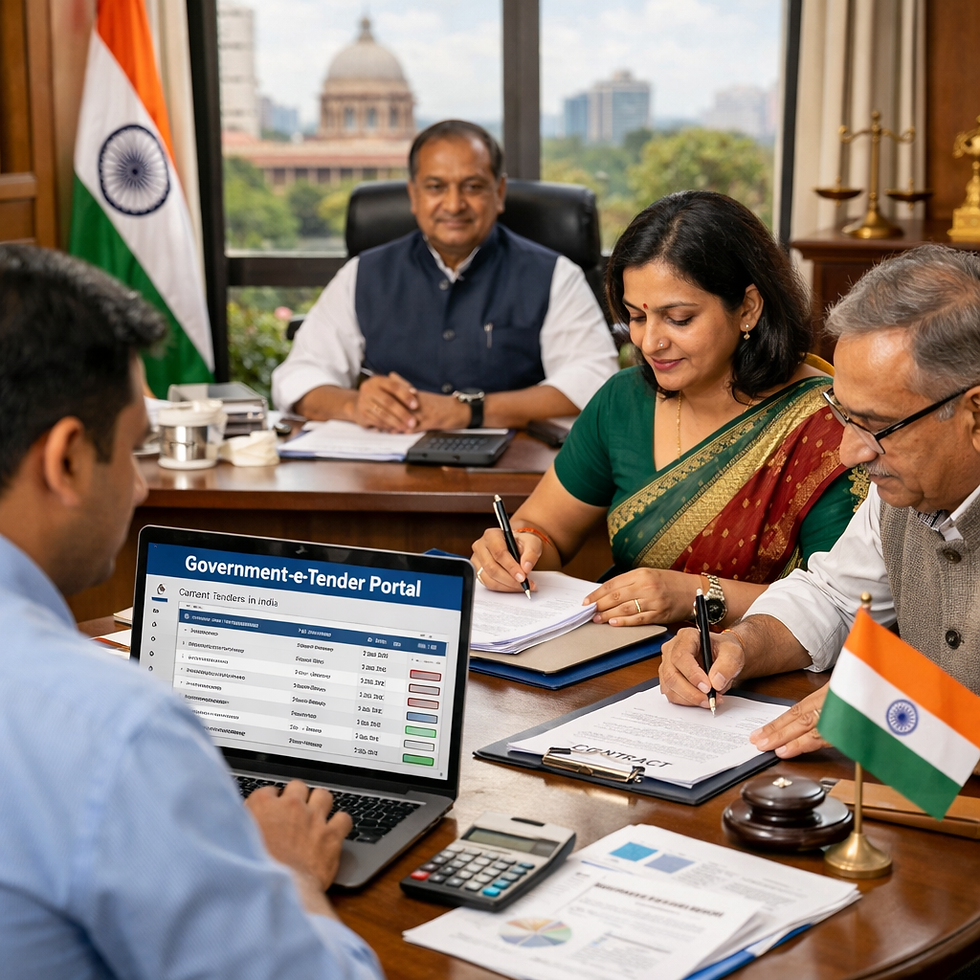
The absence of a singular central public-procurement law means that regional authenticity, local procurement culture, and specific portal navigation skills become paramount. Procurement notices, however, are consistently mandated to be publicly available, detailing essential information like dates, times, locations, subject matter, technical specifications, and participation prerequisites. This guide aims to demystify the process of tender registration India and equip you with the knowledge to approach government bidding in India with confidence.
Understanding India's Decentralized Procurement Framework
India’s procurement system is a vibrant, multi-layered structure. Instead of a single, all-encompassing legal framework, the nation relies on a combination of rules, guidelines, and localized practices. The bedrock of central government procurement lies within the General Financial Rules (GFRs), which provide a broad outline for financial management and public spending. Beyond these, various ministries, departments, and public sector undertakings have their own procurement manuals and specific guidelines tailored to their operational needs. States also maintain their independent procurement laws, adding another layer of complexity for businesses aiming to operate across different regions.
What does this mean for a prospective bidder? It implies a need for meticulous attention to detail and a willingness to adapt. A tender from a central government ministry might follow GFRs closely, while a state-level project could have entirely different eligibility criteria or submission protocols. Furthermore, sector-specific guidelines often dictate procurement for areas like defense, infrastructure, or healthcare, introducing specialized technical and compliance requirements. This decentralized approach underscores the importance of thoroughly examining each tender document and understanding the specific regulatory environment it operates within. It's not enough to know the general rules; you must delve into the specific context of each opportunity.
Navigating the Central Public Procurement Portal (CPPP)
For businesses targeting central government contracts, the Central Public Procurement Portal (CPPP), accessible via eprocure.gov.in/eprocure/app , is your primary gateway. This portal, often referred to interchangeably with the Government e-Marketplace (GeM) CPPP for central government tenders, is where the majority of central government tender invitations, amendments, and award details are published. It's an indispensable tool for discovering opportunities, submitting bids, and tracking tender progress.
The CPPP provides a wealth of information. You can find live tenders categorized by organization, complete with crucial details such as bid submission closing dates and tender opening dates. For instance, tenders like IITH/CMD/CIV/2026-27/NIT-10 (2nd Call) and NH/Sewa2/Cont/CW737/NIT-06/38 Dt.24.06.26 are examples of active procurements visible on the portal in 2026, demonstrating its continuous use. Tender IDs, such as [No.02/NHD/RTN/AB/TC/1480 / for 2026-27][2026_MoRTH_914574_1], often incorporate the financial year and department identifiers, which can be useful for internal tracking and reference. Beyond the CPPP, ministries and departments are also required to publish these details on their own websites, if they maintain one, offering an additional channel for information. This dual publication strategy ensures broad dissemination and transparency, but it also means checking both sources can be beneficial for comprehensive coverage.
Registration and Essential Pre-bid Formalities
Before you can even think about submitting a bid, registration on the central procurement portal is a non-negotiable first step. This process typically involves providing comprehensive company details. Crucially, obtaining a Digital Signature Certificate (DSC) from an authorized certifying authority is mandatory. A DSC acts as your digital identity, ensuring the authenticity and integrity of your online submissions. Think of it as your secure digital stamp of approval.
Beyond the CPPP registration and DSC, several other pre-bid registrations are commonly required and come with their own indicative timelines:
GST Registration: Essential for any business operating in India, this typically takes 7–10 days.
Udyam (MSME) Registration: For Micro, Small, and Medium Enterprises, this registration can be completed relatively quickly, usually within 1–2 days. It offers various benefits and preferential treatment in government procurement.
Digital Signature Certificate (DSC): As mentioned, this is critical. The process generally takes 2–3 days and costs approximately ₹1,000–₹2,000.
GeM Registration: If you plan to supply goods or services directly through the Government e-Marketplace, separate GeM registration is needed, taking about 3–5 days.
These registrations are not merely bureaucratic hurdles; they are foundational requirements that validate your legal standing and operational capacity within India. Without them, your bids will likely be deemed ineligible. It’s a good practice to initiate these processes well in advance of identifying specific tenders to avoid last-minute rush and potential delays.
The Tender Workflow: From Discovery to Award
Once you’ve completed your essential registrations, the journey of bidding on Indian government tenders follows a fairly standard workflow, though specific steps might vary slightly depending on the procuring entity and the nature of the tender. Here’s a general sequence you can expect:
Monitoring and Shortlisting Opportunities
The first step is vigilant monitoring of tender notices. The CPPP is your primary source, but as noted, checking individual ministry or department websites can also yield results. TendersGo.com, with its massive database covering 220+ countries and 145 languages, is an invaluable tool here. Its AI summaries, unlimited alerts, and CPV/NAICS code filtering can help you quickly identify relevant opportunities by sector, geography, and eligibility criteria, saving you countless hours of manual searching. Look for key fields like "e-published date," "closing date," "opening date," "title," "tender ID," and "organization chain" to efficiently track deadlines and assess relevance.
Deep Dive into Tender Documents
Once you’ve shortlisted a tender, the next crucial step is to download and meticulously read all tender documents. This cannot be stressed enough. These documents contain the complete eligibility criteria, technical specifications, financial requirements, terms and conditions, and submission instructions. Pay close attention to any pre-bid meeting schedules, site visit requirements, and clarification processes. Understanding these documents fully is the difference between a compliant bid and a wasted effort. TendersGo.com’s PDF viewing capabilities can be particularly helpful here, allowing for easy review of detailed specifications.
Crafting Your Bid: Technical and Financial Submissions
Indian government tenders frequently require separate submissions for technical and financial bids. This two-envelope system is designed to ensure that the technical merits of a proposal are evaluated independently of its cost, preventing price from unduly influencing the technical assessment. It’s a standard practice aimed at promoting fair competition and quality outcomes.
Technical Bid Preparation
Your technical bid is where you demonstrate your capability, experience, and understanding of the project requirements. This typically includes detailed proposals outlining your methodology, project plan, team qualifications, past experience with similar projects, and compliance with all technical specifications. Any deviations from the specifications must be clearly stated and justified, though it’s generally advisable to adhere as closely as possible. Ensure all required certifications, licenses, and supporting documents are included. Remember, the technical bid is usually evaluated first, and only technically qualified bidders proceed to the financial bid opening.
Financial Bid Preparation
The financial bid outlines your proposed costs for delivering the goods or services. It must be prepared strictly according to the format specified in the tender documents, which often includes bill of quantities, rate schedules, and payment terms. Accuracy is paramount; even minor mathematical errors can lead to disqualification. Be mindful of any requirements for bid security or Earnest Money Deposit (EMD), which is typically 2–5% of the tender value. The exact amount will always be specified in the tender document itself. This EMD serves as a guarantee of your commitment to the bid and is usually refunded to unsuccessful bidders.
Submission, Evaluation, and Post-Award Procedures
With your technical and financial bids meticulously prepared, the next phase involves submission, evaluation, and, if successful, the post-award formalities.
Submitting Your Bid
All submissions for central government tenders are made online through the CPPP before the specified deadline. This is where your Digital Signature Certificate (DSC) comes into play, authenticating your submission. Ensure you upload all documents in the correct formats and within the stipulated file size limits. A common pitfall is waiting until the last minute, risking technical glitches or slow internet connections. Always aim to submit well in advance of the closing time.
Bid Opening and Evaluation
Following the submission deadline, the bid opening process commences. Initially, technical bids are opened, usually online, and evaluated against the specified criteria. Only bidders who meet the technical requirements will have their financial bids opened. The evaluation process is often transparent, with details of qualified bidders sometimes made public. Open tenders require a minimum submission period of three weeks, while global tenders, which include foreign bidders, demand at least four weeks, providing ample time for preparation and submission.
Post-Award Clearances
If your bid is successful, congratulations! However, the process doesn't end there. You will typically need to complete various post-award approvals and clearances. This might include signing contracts, providing performance guarantees, and fulfilling any other conditions precedent to project commencement. The name of the successful bidder, along with award details, must be published on the GeM CPPP, the procuring entity’s website, and its notice board, ensuring transparency in the award process.
Strategic Considerations for International Bidders
For international firms, bidding on Indian government tenders offers significant growth potential, but it also comes with unique considerations. Understanding the local business environment, cultural nuances, and regulatory requirements beyond just procurement rules is vital.
Firstly, consider partnerships with local Indian companies. These collaborations can provide invaluable insights into regional specificities, facilitate market entry, and help navigate local logistical and administrative challenges. A local partner can also help with compliance requirements and provide a familiar face in a new market.
Secondly, be prepared for language differences. While tender documents for global tenders are typically in English, effective communication with local stakeholders, especially at the state or municipal level, might require local language capabilities. This is another area where a local partner can be extremely beneficial.
Finally, remember that the Indian government is increasingly focused on promoting domestic manufacturing and local content. While global tenders are open to international participation, understanding any "Make in India" policies or preferences can help you tailor your offerings to align with national objectives. TendersGo.com’s capabilities, including saved searches and CPV/NAICS codes, can help international bidders pinpoint opportunities that align with their capabilities and strategic objectives, regardless of language barriers, by providing AI summaries and PDF viewing in 145 languages.
Successfully engaging with India’s government procurement market in 2026 demands diligence, adaptability, and a strategic approach. By understanding the decentralized legal framework, mastering the e-procurement portals, completing essential registrations, and meticulously preparing your bids, you significantly enhance your chances of securing valuable contracts. The journey may have its complexities, but the rewards of participating in one of the world's largest public procurement markets are substantial. For those ready to dive in, resources like TendersGo.com offer an unparalleled advantage, providing a comprehensive B2B marketplace, AI-powered insights, and unlimited alerts to keep you ahead of the competition. Don't forget to take advantage of their free 30-day trial to experience the full power of their platform.