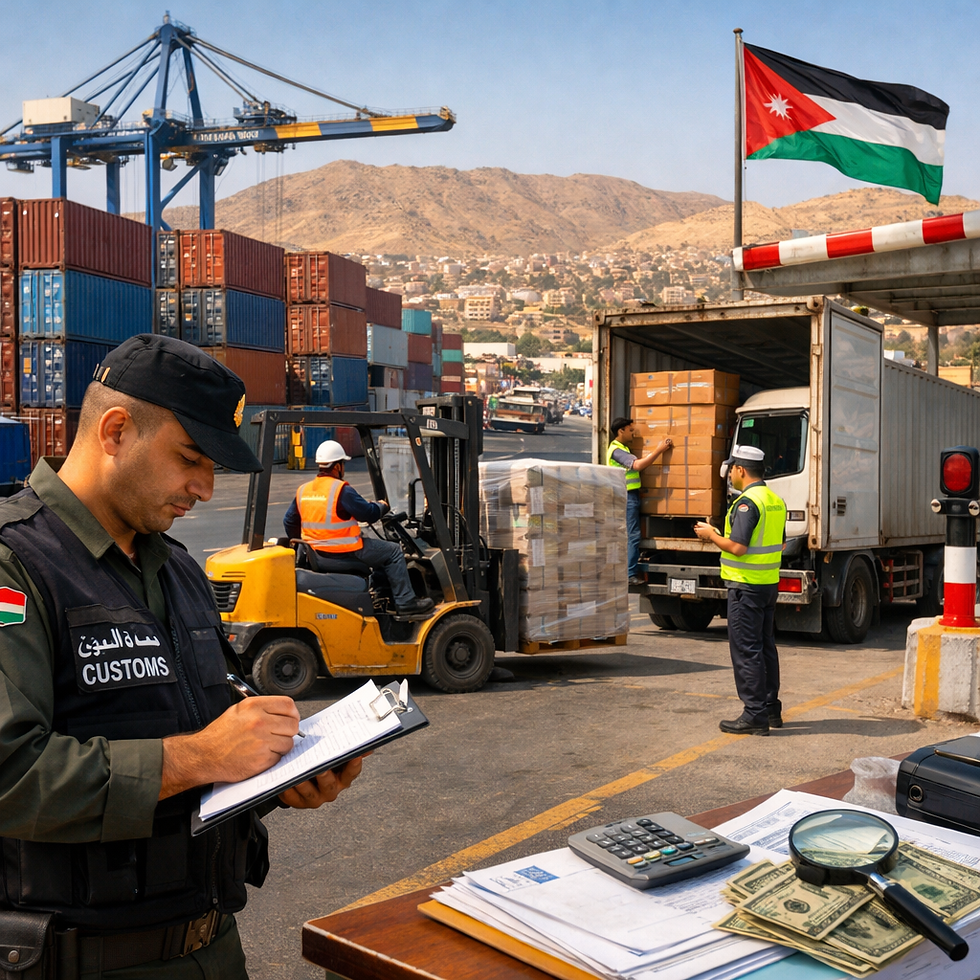
FOB vs CIF for Africa Shipments in 2026

When it comes to international trade, particularly shipments bound for the dynamic markets of Africa, understanding the nuances of Incoterms is not just good practice – it's absolutely essential. In 2026, as global supply chains continue to evolve, the choice between FOB vs CIF for Africa shipments remains a critical decision for bid managers, export managers, and procurement officers alike. These two Incoterms, Free On Board (FOB) and Cost, Insurance and Freight (CIF), govern how responsibilities, costs, and risks are allocated between buyer and seller, profoundly impacting your Incoterms 2020 for African imports strategy and ultimately, your bottom line.

Having spent more than 15 years on the ground, witnessing countless transactions across the continent, I've seen firsthand how a well-chosen Incoterm can smooth the path for a successful delivery, and conversely, how a misunderstanding can lead to costly delays and disputes. The complexities of African logistics, from port congestion to customs procedures, mean that clarity from the outset is paramount. Let's delve into these two pivotal terms and explore which approach might be best suited for your next venture into Africa.
FOB and CIF: The Core Definitions in 2026
To truly grasp the implications of choosing FOB or CIF, we must first revisit their fundamental definitions under Incoterms® 2020, which remain the prevailing standard in 2026. These definitions, as reiterated by sources like DHL's Incoterms for Sea Freight guide, lay the groundwork for everything that follows.
Under FOB, or Free On Board, the seller fulfills their obligation when the goods are delivered on board the vessel nominated by the buyer at the named port of shipment. At this precise moment, the risk of loss or damage to the goods transfers from the seller to the buyer. What does this mean in practical terms? The seller handles the pre-carriage to the port and the loading onto the ship. From that point onwards, the buyer takes over, assuming responsibility for ocean freight, insurance, and all subsequent costs and risks to the final destination. This gives the buyer a significant degree of control over the main carriage segment of the journey.
Conversely, CIF, or Cost, Insurance and Freight, places a greater initial burden on the seller. Here, the seller pays for the carriage of the goods to the named port of destination. Crucially, the seller also procures minimum insurance coverage against the buyer's risk of loss or damage to the goods during carriage. However, and this is a point often misunderstood, the transfer of risk under CIF occurs at the same point as FOB: when the goods are loaded on board the vessel at the port of origin. So, while the seller arranges and pays for freight and insurance to the destination port, the buyer assumes risk once the goods are on the ship at the departure port. This distinction is vital and cannot be overstated when considering Africa shipping risk transfer explained .
It's also important to remember that both FOB and CIF are specifically designated for sea and inland waterway transport. They are among the four Incoterms 2020 rules tailored for situations where goods are transported by vessel. Attempting to apply them to air freight or multimodal transport can lead to significant confusion and potential disputes, making a thorough understanding of their limitations just as important as their definitions.
Cost Implications and Control: Buyer vs. Seller Perspective
The choice between FOB and CIF inherently dictates who controls and pays for which segments of the shipping journey. This isn't just about money; it's about control, visibility, and strategic advantage, especially when dealing with the varied logistical landscapes across Africa.
With FOB, the buyer is firmly in the driver's seat for the main carriage. They are responsible for contracting the ocean freight forwarder, negotiating freight rates, and arranging marine insurance from the port of shipment to the destination. This arrangement is particularly appealing to buyers who have established relationships with freight forwarders, perhaps benefiting from bulk discounts or specialized services. They might also prefer to consolidate shipments from multiple suppliers, which is far easier to manage when they control the main carriage. An Africa trade guide from Business Elites Africa in September 2026 noted that FOB is commonly used when buyers want direct control over freight and insurance, allowing them to optimize their supply chain and potentially reduce overall costs by leveraging their own network.
On the other hand, CIF empowers the seller to manage the main carriage and insurance. The seller selects the carrier and arranges the freight and minimum insurance to the named port of destination. This can be advantageous for buyers who prefer a more "hands-off" approach, receiving a bundled price that includes these costs. For sellers, offering CIF can be a competitive differentiator, providing an all-in price to the destination port that simplifies the buyer's procurement process. However, buyers should be aware that while the freight and minimum insurance are covered, destination charges, duties, and inland delivery costs from the destination port still fall to them. This is a critical point highlighted in an Africa trade guide from ExportReady Africa in March 2026, which cautions that while CIF simplifies the upfront landed-cost quote, these subsequent costs remain the buyer's responsibility.
From a procurement officer’s perspective, evaluating the total landed cost is paramount. While a CIF quote might appear higher initially, it bundles costs that an FOB quote would leave for the buyer to arrange. The real question is: does the buyer have the expertise, volume, and relationships to secure better freight and insurance rates than the seller? If the answer is yes, FOB often proves more cost-effective. If not, or if simplicity and a single point of contact for the main carriage are priorities, CIF can be a viable option.
Understanding Risk Transfer: A Constant in Both Incoterms
Despite the differences in cost and responsibility allocation, a fundamental aspect of both FOB and CIF that often causes confusion, especially for those new to international trade, is the point of risk transfer. In both cases, the risk of loss or damage to the goods transfers from the seller to the buyer once the goods are loaded on board the vessel at the port of origin. This is a consistent rule under Incoterms® 2020, as confirmed by several 2026 sources, including JLog's guide for South African importers and DHL's sea freight document.
Let me paint a picture. Imagine your goods, destined for Mombasa, are loaded onto a ship in Rotterdam under a CIF agreement. The seller has paid for the freight and minimum insurance to Mombasa. However, if a storm damages the cargo while the ship is still in the Atlantic, the risk of that damage, despite the seller having paid for the freight and insurance, lies with the buyer. This is because the risk transferred once the goods were safely on board in Rotterdam. The seller's obligation for freight and insurance is a cost obligation, not a risk obligation beyond the loading point.
This subtle but significant detail means that even with CIF, buyers must be vigilant about securing adequate insurance coverage for the entire journey from the loading port. While the seller provides minimum insurance under CIF, this often covers only the value of the goods and may not extend to the buyer's full commercial interest or cover all potential risks. A prudent buyer will always review the seller's insurance policy under CIF and consider purchasing supplementary coverage to protect their investment fully.
Africa-Specific Considerations for Your Next Shipment
Navigating the complexities of African logistics requires more than just a theoretical understanding of Incoterms; it demands practical, region-specific insight. My years of experience across various African ports, from Durban to Lagos, have shown me that local practices and regulatory environments can significantly influence the best Incoterm choice.
One major consideration is the level of control a buyer wishes to exert over their supply chain. As noted by Draba Ventures in April 2026, African buyers often prefer FOB when they have established relationships with local freight forwarders who understand the intricacies of their specific ports, customs procedures, and inland transportation networks. This allows them to secure competitive rates and ensure smoother clearance processes, which can be notoriously challenging in some African countries. By taking control of the main carriage, buyers can mitigate risks associated with unknown or less experienced carriers chosen by sellers under CIF terms.
However, for smaller buyers or those new to importing into Africa, CIF can offer a simpler, more predictable upfront cost. A seller experienced in shipping to a particular African destination might have better access to competitive freight rates and a more streamlined process for getting goods to the destination port. This can be particularly appealing if the buyer lacks the logistical infrastructure or expertise to manage the international leg of the journey efficiently. Nonetheless, buyers must remember that their responsibilities kick in immediately upon arrival at the destination port, encompassing port charges, customs clearance, duties, and inland transport.
Customs Valuation: The South African Example
One area where local regulations can significantly impact the financial outcome, regardless of the chosen Incoterm, is customs valuation. South Africa provides a clear example of this. According to a 2026 South Africa trade guide from JLog, customs duty is calculated on the FOB value of the goods. This means that even if you import under CIF terms, where the freight and insurance are bundled into the invoice, South African customs will still base the duty calculation on what the goods would have cost if shipped FOB.
Furthermore, import VAT in South Africa is calculated on the Added Tax Value (ATV), which is defined as the FOB value plus a 10% upliftment, plus any non-rebated duty. This specific calculation method, regardless of the Incoterm on the commercial invoice, underscores the importance of understanding the local customs regime. It means that even if you opt for CIF for convenience, you must still be able to ascertain the equivalent FOB value for customs purposes, or risk delays and penalties. This highlights the need for transparency from sellers regarding the breakdown of CIF pricing. Procurement officers must insist on this detail to accurately forecast their landed costs.
Documentation and Compliance for African Shipments
Regardless of whether you choose FOB or CIF, meticulous documentation and adherence to compliance standards are non-negotiable for African shipments. The regulatory landscape across the continent is diverse, and getting documentation wrong can lead to severe delays, demurrage charges, and even forfeiture of goods. I've seen countless containers held up for weeks, sometimes months, because of a missing Certificate of Origin or an incorrectly declared value.
For both FOB and CIF, essential documents typically include the commercial invoice, packing list, bill of lading (or sea waybill), and certificate of origin. Depending on the product and destination country, additional documents like pre-shipment inspection certificates, health certificates, or import permits may be required. Under FOB, the buyer's nominated freight forwarder will often handle much of the documentation for the main carriage and destination, while under CIF, the seller's forwarder manages the main carriage documentation, passing it on to the buyer for destination clearance.
It's crucial for both parties to ensure that all documentation aligns perfectly with the chosen Incoterm. For instance, the bill of lading under CIF will typically show the destination port, with freight marked as prepaid. Under FOB, it would show the port of loading, with freight marked as collect or payable by the consignee. Any discrepancies can raise red flags with customs authorities, leading to scrutiny and potential delays. TendersGo, with its extensive database covering 220+ countries and 145 languages, can be an invaluable resource for staying updated on specific documentation requirements for tenders and procurements in various African nations, offering AI summaries and PDF viewing capabilities.
Making the Right Choice: Which Incoterm to Use for Africa Trade?
So, which Incoterm to use for Africa trade in 2026? The answer, as is often the case in international trade, is "it depends." There's no one-size-fits-all solution, and the optimal choice will hinge on several factors unique to each transaction and the capabilities of the buyer and seller.
Consider FOB if:
You, as the buyer, have strong relationships with freight forwarders and can secure better rates and service for ocean freight and insurance.
You want maximum control over the shipping process, including carrier selection, route, and insurance coverage.
You are importing high-value goods where specific insurance coverage beyond the minimum is critical.
You have the internal expertise to manage the complexities of international shipping from the port of origin onwards.
Your destination country's customs valuation is based on FOB value, making it easier to declare accurately.
Consider CIF if:
You, as the buyer, prefer a simpler, all-inclusive price from the seller to the destination port, reducing your administrative burden for the main carriage.
The seller has established, efficient shipping channels to your African destination, potentially offering better rates or faster transit times than you could secure yourself.
You are importing lower-value goods where the cost of managing the main carriage yourself might outweigh the potential savings.
You are new to importing into a particular African market and prefer to rely on the seller's expertise for the international leg.
The seller is offering highly competitive CIF pricing that, even after accounting for destination charges, still represents a good deal.
Ultimately, the decision should be made after a thorough FOB or CIF landed cost comparison , factoring in not just the immediate costs but also the indirect costs associated with risk, control, and administrative effort. Always engage in clear communication with your counterparty, ensuring both sides fully understand their obligations under the chosen Incoterm. For those looking to gain a competitive edge in procurement, leveraging platforms like TendersGo, with its unlimited alerts and saved searches, can help identify opportunities where the Incoterm choice can be strategically negotiated.