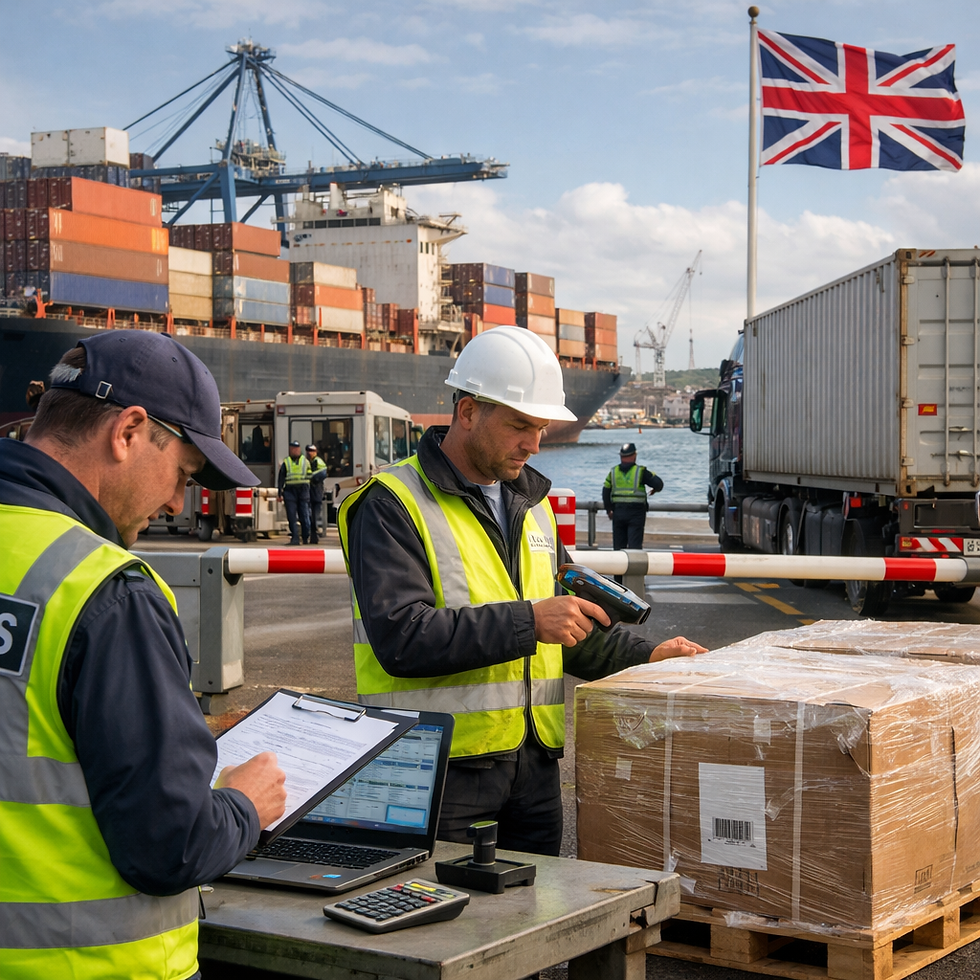
EU CBAM 2026: Importer Steps for Covered Goods

The European Union's Carbon Border Adjustment Mechanism (CBAM) isn't just another acronym; it's a fundamental shift in how businesses interact with the EU market. As of 2026, importers bringing certain goods into the EU customs territory face new obligations. Understanding these EU CBAM importer steps 2026 is crucial for anyone involved in international trade, from procurement officers to export managers. This guide will walk you through the specifics of how to comply with EU CBAM for imports , covering everything from authorization to reporting, ensuring your operations remain smooth and compliant.

The definitive regime for EU CBAM kicks off on 1 January 2026. This isn't a soft launch; it's the real deal. If your business imports specific materials or products, you need to be prepared. The clock is ticking, and the procedures for compliance are already in place, with official guidance from the European Commission updated as recently as October 2026. Ignoring these requirements could lead to significant disruptions and penalties.
CBAM Covered Goods: What's on the List for 2026?
One of the first questions any importer asks is, "Are my products affected?" For 2026, the EU CBAM focuses on a specific set of sectors known for their carbon intensity. These include cement, iron and steel, aluminium, fertilisers, electricity, and hydrogen. This list is explicit and has been verified in official EU sources, including the Commission's definitive regime and registry pages.
It's vital to remember that CBAM applies to these goods regardless of their production date or the date of the sales contract. If they enter the EU customs territory from 1 January 2026 onwards, they are subject to CBAM requirements. This means forward planning is essential. If you're dealing with any of these materials, whether as raw components or finished products containing them, you must prepare for the new regulations.
The scope is precise. For example, if you're importing steel components for manufacturing, those components fall under the CBAM umbrella. Similarly, large-scale fertiliser imports or even electricity transmitted across borders will be subject to these new rules. Understanding the specific HS codes associated with these categories is a critical first step in determining your exposure.
The 50-Tonne Threshold: Do You Need Authorisation?
Not every single import will require full CBAM declarant status right away, but many will. The EU has set a clear threshold for 2026: if you are importing more than 50 tonnes of CBAM goods per calendar year, you must hold a CBAM account number or application reference number. This 50-tonne limit is the single mass-based threshold cited in the current 2026 guidance.
This threshold applies to the total mass of covered goods. So, if you import 30 tonnes of steel in one shipment and 25 tonnes of aluminium in another within the same year, you've crossed the 50-tonne mark and need to pursue authorisation. This isn't just a suggestion; it's a mandatory requirement to avoid delays in the release of your goods for free circulation from 1 January 2026.
Even if you anticipate being below this threshold, it's prudent to monitor your imports closely. Unexpected spikes in demand or new contracts could push you over the limit. Planning for potential authorisation, even if you don't immediately meet the threshold, can save considerable time and effort down the line. The Commission's CBAM communication page explicitly states this 50-tonne requirement for 2026.
Becoming an Authorised CBAM Declarant: Your Step-by-Step Guide
For those exceeding the 50-tonne threshold, obtaining the status of an authorised CBAM declarant is non-negotiable. This process involves several key stages, and timely application is paramount. The official guidance from the European Commission details a clear sequence of actions that importers must follow.
The application process should ideally be initiated well before you plan to import CBAM goods. While guidance suggests applications should be submitted "before importing goods," it also states "latest by 31 March 2026." Given the potential for administrative delays, aiming for completion well ahead of the March deadline is highly advisable. Waiting until the last minute could jeopardise your import operations.
The core compliance obligations for 2026 are clear: importers must be authorised, report embedded emissions, and surrender corresponding CBAM certificates for covered imports. Without the authorised declarant status, the subsequent steps become impossible. Let's break down the application sequence:
Step 1: Universal User Management & Digital Signature (UUM&DS) Registration
The journey begins with registering for the Universal User Management & Digital Signature (UUM&DS) system. This is the EU's central system for managing access to various customs and taxation platforms. Think of it as your digital passport for interacting with EU customs services. Without a UUM&DS account, you won't be able to proceed with the subsequent steps.
This registration ensures a secure and standardised way for businesses to authenticate their identity across different EU digital services. It's a foundational requirement for many EU-wide digital initiatives, and CBAM is no exception. Ensure all your company details are accurate and up-to-date during this initial registration phase.
Step 2: Obtain a UUM&DS Profile via Your National Competent Authority (NCA)
Once you've registered for UUM&DS, the next step is to obtain a UUM&DS profile through your National Competent Authority (NCA). The NCA is the designated body in each EU Member State responsible for overseeing CBAM implementation. For instance, in Germany, this would involve their customs authorities.
Your NCA acts as a gateway, verifying your identity and linking your UUM&DS account to your specific national business registration. This step is crucial for establishing your legitimate presence as an importer within your Member State. Access to the CBAM Registry is specifically requested through the NCA of the EU country where the importer is established.
Step 3: Submit Your Application in the Authorisation Management Module (AMM)
With your UUM&DS profile established via the NCA, you can now submit your application for authorised CBAM declarant status. This is done through the Authorisation Management Module (AMM), which is the dedicated channel for such applications. The Commission’s CBAM Registry page explicitly directs importers to apply via the AMM.
The AMM is part of the broader CBAM Registry. This online module will guide you through the application process, requesting specific details about your company and your anticipated imports. It's where you formally declare your intention to become an authorised CBAM declarant. Ensure all required documentation is prepared and ready for upload, as incomplete applications can cause significant delays.
Navigating National CBAM Portals: The German Example
While the UUM&DS, NCA, and AMM provide the overarching EU framework, individual Member States often have their own national portals and specific requirements for accessing these EU systems. Let's look at Germany as a practical example, as its guidance offers a detailed roadmap for national compliance.
In Germany, accessing the CBAM Portal requires several prerequisites. First, an ELSTER account is essential. ELSTER is Germany's online tax portal, and it serves as a key identifier for businesses. Second, you'll need a Business customer account in the Customs Portal. This links your business directly to customs operations within Germany. An EORI number is also a fundamental requirement, acting as your unique identifier for customs purposes across the EU.
Once these foundational elements are in place, German importers must register with the EU Trader Portal, CBAM Portal service. After successful registration in the national Customs Portal, users must link their account to the EU Trader Portal, CBAM Portal service. From there, they will select "Access EU applications" to reach the CBAM Transitional Registry menu. This layered access ensures secure and verified entry into the CBAM system.
A critical piece of information for German importers is the "APPL number." Once registration is completed within the German system, an APPL number is issued. This number must be entered in the customs declaration under document code Y238. This specific requirement highlights the need for meticulous attention to detail during the customs declaration process for CBAM goods.
The CBAM Declaration: Reporting and Surrendering Certificates
Once authorised, your responsibilities shift to reporting embedded emissions and surrendering CBAM certificates. This is the core of the definitive regime, designed to level the playing field between EU producers, who pay a carbon price, and importers.
For the 2026 reporting year, the CBAM declaration is due by 30 September 2027. This deadline is specified in Regulation (EU) 2025/2083, which updates earlier texts. It's important to note this specific date, as prior regulations mentioned 31 May of each year. This means you have ample time after the end of the reporting year to compile and submit your declaration, but preparation should begin much earlier.
The declaration will require detailed information on the embedded emissions of your imported goods. This means working closely with your suppliers to obtain accurate data on their production processes and the carbon footprint of their products. This data will form the basis for calculating the number of CBAM certificates you need to surrender. The Commission's CBAM pages, last updated in October 2026, provide the most current operational guidance.
CBAM certificates are essentially a digital representation of the carbon price. Importers will purchase these certificates from the relevant authorities and then surrender them to cover the embedded emissions of their imported goods. The mechanism is designed to mirror the EU's Emissions Trading System (ETS), ensuring that carbon costs are applied consistently to both domestic and imported products.
Staying Compliant: Resources and Future Outlook
The world of international procurement and trade compliance is constantly evolving, and CBAM is a prime example. Staying informed is not just a recommendation; it's a necessity. The European Commission provides a wealth of information through its official channels, including the CBAM communication/news, CBAM definitive regime, CBAM Registry, and the general CBAM Commission pages, all found on the European Commission Taxation and Customs Union domain.
These resources are your go-to for the latest updates, Q&As, and detailed guidance. I've spent over 15 years in this field, and I can tell you that relying on official sources is paramount. Misinformation can be costly. For example, the Commission Q&A clearly states that CBAM applies regardless of production date or sales contract date for imports from 2026 onwards – a critical detail often overlooked.
For bid managers, export managers, and procurement officers, integrating CBAM compliance into your tender strategies and supply chain management is no longer optional. When evaluating suppliers, their ability to provide accurate emissions data will become a significant factor. When bidding on contracts involving CBAM goods, understanding the additional costs associated with certificates will be crucial for competitive pricing.
Tools like TendersGo.com can be invaluable in this new landscape. As the world's largest tender search engine, covering 220+ countries and 145 languages, it offers AI summaries, unlimited alerts, PDF viewing, and detailed CPV/NAICS codes. Imagine setting up saved searches for tenders specifically mentioning CBAM compliance or related environmental criteria. The B2B marketplace and the free 30-day trial offer a practical way to explore how these tools can support your evolving procurement needs.
The introduction of CBAM represents a significant step in the EU's climate policy. It aims to prevent carbon leakage and promote cleaner industrial production globally. For importers, this means a new layer of responsibility and a need for greater transparency in their supply chains. Proactive engagement with these new requirements will not only ensure compliance but also position businesses for long-term success in a more carbon-conscious global market.