
How to Bid on USA Federal Tenders in 2026

The United States federal government represents one of the largest and most consistent purchasers of goods and services globally. For businesses looking to expand their reach, understanding how to bid on USA federal tenders and navigating the nuances of government bidding is not just an opportunity, it’s a strategic imperative. In 2026, the landscape for federal procurement continues to evolve, bringing both new challenges and clearer pathways for engagement. As an experienced journalist who has spent countless hours observing and reporting on procurement practices worldwide, I’ve seen firsthand how crucial it is to stay updated on the latest regulations and platforms.
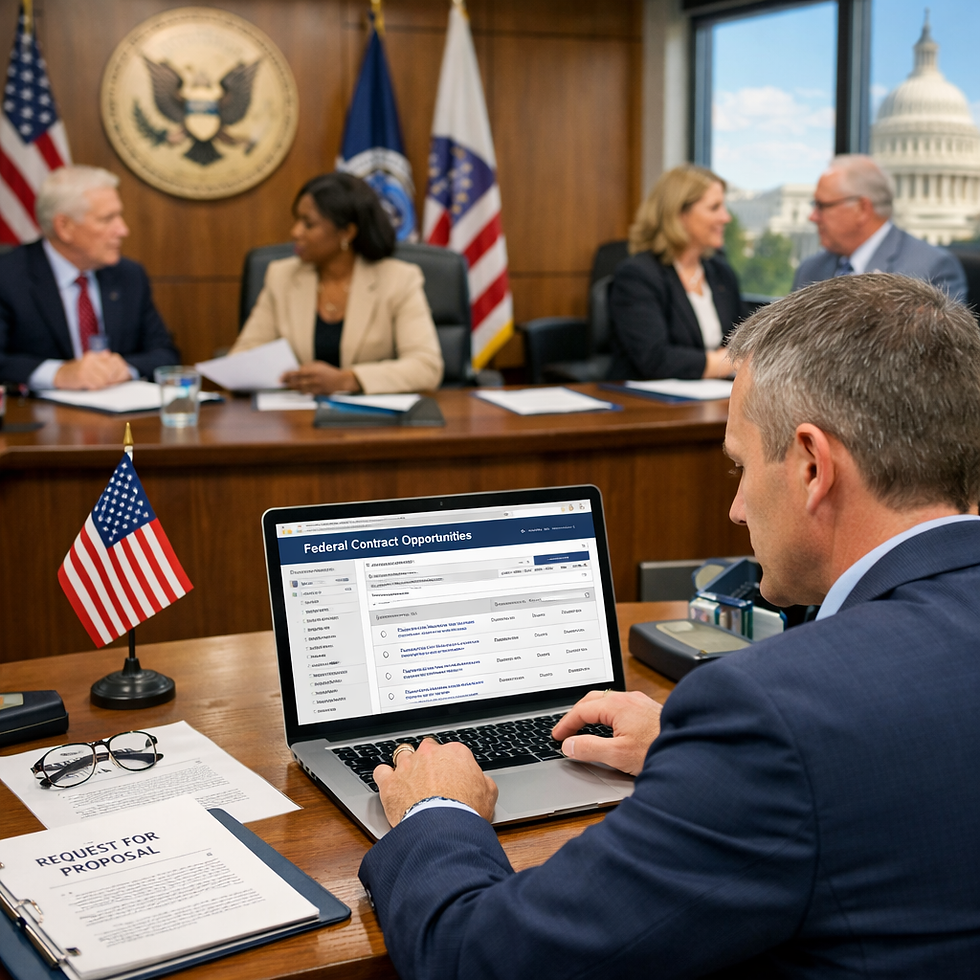
The U.S. federal procurement system, while complex, operates with a commitment to transparency and competition. This means that with the right preparation and understanding of the rules, even smaller businesses can successfully compete for contracts. The key, as always, lies in diligent research, meticulous preparation, and a keen eye on regulatory changes. Let's delve into the specifics of what you need to know to secure federal contracts in 2026.
SAM.gov: Your Central Hub for Federal Procurement
If you're serious about competing for U.S. federal contracts, your journey begins and largely continues with SAM.gov . This isn't just another government website; it's the centralized, mandatory portal for nearly all federal procurement activities. From finding opportunities to understanding contract awards and even registering your business, SAM.gov serves as the foundational platform. I’ve watched this platform evolve over the years, and its role as the definitive source has only solidified.
All federal contract opportunities are posted on SAM.gov’s Contract Opportunities page . This is where you’ll find solicitations for everything from IT services to construction projects, medical supplies, and consulting work. It’s a dynamic portal, updated constantly with new requirements from various federal agencies. To effectively search for relevant tenders, you'll need to familiarize yourself with its search functionalities, filtering by agency, NAICS codes, CPV codes, and keywords. This is where a robust search engine like TendersGo.com , with its ability to search across 220+ countries and 145 languages, becomes invaluable, allowing you to quickly identify opportunities on SAM.gov and other global portals, offering AI summaries and unlimited alerts.
Beyond active solicitations, SAM.gov also houses comprehensive contract award data. For years, the Federal Procurement Data System (FPDS.gov) was the go-to for this information. However, as of February 24, 2026, FPDS.gov now redirects to SAM.gov, and its ezSearch functionality has been decommissioned. This transition underscores SAM.gov’s role as the single authoritative source. To view public contract award data, you'll need a SAM.gov user account, though no specific role is required to access this public information. The contract award search on SAM.gov includes publicly available information on unclassified contract actions exceeding the micro-purchase threshold and modifications that change previously reported data, regardless of dollar value. This data is critical for market research, helping you understand who your competitors are, what agencies are buying, and at what price points.
Supplier Registration and Tender Compliance
Before you can even think about submitting a bid, your business must be properly registered in SAM.gov. This process, while sometimes perceived as daunting, is absolutely non-negotiable. It involves providing detailed information about your company, its ownership, financial data, and certifications. Without a current and active SAM.gov registration, your bid will not even be considered. This is a common pitfall I’ve seen many businesses stumble upon; they find a perfect tender, only to realize their registration isn't up to date.
Once registered, maintaining compliance is an ongoing effort. Federal procurement is governed by the Federal Acquisition Regulation (FAR), a vast and continually updated set of rules. Understanding the specific FAR clauses applicable to a given solicitation is paramount. Each tender document will reference relevant FAR sections, and it's your responsibility to review and understand them. This isn't just about reading the text; it's about understanding the implications for your business, your pricing, and your ability to perform.
The U.S. government takes tender compliance very seriously, and any deviations or omissions can lead to disqualification. This level of scrutiny means that meticulous attention to detail is not just a recommendation, it's a requirement. For those managing bids, having a system to track these requirements and ensure every box is checked is essential. Tools that offer PDF viewing and CPV/NAICS code search, like TendersGo , can significantly aid in this process, ensuring you’re always referencing the correct regulations and codes.
The Evolving Landscape of Federal Acquisition Regulation (FAR) in 2026
The Federal Acquisition Regulation (FAR) serves as the bible for U.S. federal procurement. It's a living document, constantly updated to reflect new policies, executive orders, and market realities. Staying abreast of these changes is not merely good practice; it’s essential for successful government bidding. In 2026, we’ve seen some significant shifts that demand attention from anyone looking to engage with federal contracts.
The baseline for current FAR is set by Federal Acquisition Circular (FAC) 2026-01, which was published on March 13, 2026. Its FAR changes became effective on the same date, unless otherwise specified. A critical point for all bidders: these FAR changes apply to solicitations issued on or after the effective date of the change, unless explicitly stated otherwise. This means if you’re working on a bid for a solicitation issued after March 13, 2026, you absolutely must ensure your proposal reflects the latest regulations.
One notable change within FAC 2026-01 is a final rule adjusting thresholds for the World Trade Organization Government Procurement Agreement and various Free Trade Agreements, also effective March 13, 2026. For businesses operating internationally or those considering partnerships with foreign entities, understanding these updated thresholds is crucial. They can influence everything from eligibility to the competitive landscape of a particular tender. The core principle of competition, as outlined in FAR Part 6 , remains a cornerstone across federal acquisitions, ensuring a fair playing field for all qualified bidders.
Key Regulatory Overhauls and Executive Orders
Beyond the routine FAC updates, 2026 marks a period of more fundamental shifts in federal procurement policy. A major development is the 2026 FAR rule titled FAR Case 2026-001, “Revolutionary Federal Acquisition Regulation Overhaul.” This rule is far-reaching, covering FAR parts 1, 2, 4, 33, 39, 40, and 53. Such a broad overhaul signals a significant effort to modernize and potentially simplify aspects of federal contracting. As a journalist, I’ve seen previous attempts at "overhaul," and while the term can sometimes be overused, the scope here suggests genuine intent for impactful change.
This overhaul isn't happening in a vacuum; it’s part of the implementation of Executive Order 14275, “Restoring Common Sense to Federal Procurement,” issued on April 15, 2025. This Executive Order clearly telegraphs a desire from the highest levels of government to make federal procurement more efficient, accountable, and performance-driven. For businesses, this might translate into more streamlined processes, clearer expectations, and potentially a greater emphasis on performance-based contracting. It’s worth regularly checking Acquisition.gov , the official source for federal acquisition regulations, for the latest updates. I’ve noticed a banner on Acquisition.gov specifically mentioning “FAR Overhaul Updates for Parts 16 and 52 - Implementation of E.O. 14402, Promoting Efficiency, Accountability, and Performance in Federal Contracting,” indicating that additional changes are already in motion or soon to be implemented.
For those interested in the granular details, Acquisition.gov maintains the latest FAR text, including a comprehensive browse index. You can directly access specific parts like FAR Part 1 for general provisions, FAR Part 6 for competition requirements, and FAR Part 52 for solicitation provisions and contract clauses. Familiarizing yourself with these foundational parts is a baseline requirement for any serious federal contractor.
Agency-Specific Deviations: The HHS Example
While the FAR provides the overarching framework for federal procurement, individual agencies often issue "class deviations" to tailor regulations to their specific needs and operational contexts. These deviations are critically important because they can introduce requirements or procedures that differ from the standard FAR. Ignoring them can lead to immediate disqualification, regardless of how strong your technical proposal might be. It’s a classic example of why a one-size-fits-all approach to federal bidding simply doesn't work.
Take, for example, the Department of Health and Human Services (HHS). A 2026 FAR class deviation amendment issued for HHS mandates that contracting staff follow updated Request for Offer (RFO) FAR Part 16 model deviation text. This amendment also includes a new requirement for an approved written justification for covered contracts or orders. For any business targeting HHS contracts, understanding these specific modifications is absolutely essential. It means your proposal needs to align not just with the general FAR, but also with these agency-specific nuances.
This HHS amendment goes further, clarifying several key policy points. Below the competitive threshold, contracting officers must first attempt a competitive 8(a) order using SBA-approved government-wide contracts before they can even consider a sole-source 8(a) action. This policy emphasizes competition and supports small businesses, particularly those in the 8(a) program. Furthermore, the amendment clearly states that fixed-price contract types are the default and preferred contract type. This is a significant signal to bidders, indicating a preference for predictable costs and reduced financial risk for the government. Finally, a fair-notice requirement has been clarified for orders or Blanket Purchase Agreements (BPAs) valued above the Simplified Acquisition Threshold (SAT). These specific details highlight the need for bidders to read every part of the solicitation and any accompanying agency-specific guidance.
Navigating the Bidding Process: Practical Steps
With an understanding of the regulatory landscape, let’s talk practical steps for navigating the bidding process for USA federal tenders. It’s a multi-stage journey, and success often hinges on preparedness and strategic execution. I’ve observed countless companies, both large and small, go through this process, and the ones that succeed consistently demonstrate methodical planning.
First, ensure your business is fully registered and active in SAM.gov. This includes maintaining up-to-date information and completing any required annual renewals. Remember, your SAM.gov registration is your entry ticket. Next, consistently monitor SAM.gov’s Contract Opportunities page ( sam.gov/opportunities ) for relevant tenders. This is where tools like TendersGo become indispensable. With its B2B marketplace, saved searches, and the ability to set up unlimited alerts based on keywords, CPV codes, or agencies, you can automate much of the opportunity identification process, ensuring you never miss a tender that fits your profile. It's a proactive approach that saves significant time and effort compared to manual searching.
Once you identify a promising opportunity, download all associated documents immediately. This usually includes the Request for Proposal (RFP), Statement of Work (SOW), and any amendments or attachments. Pay close attention to the solicitation number, closing date, and contact information for the contracting officer. These documents will detail the requirements, evaluation criteria, and specific FAR clauses applicable to that tender. Creating a compliance matrix to track every requirement against your proposed solution and ensuring all mandatory forms are completed accurately is a best practice I cannot stress enough.
Crafting a Winning Proposal and Submission
A winning proposal is more than just a good technical solution; it’s a document that clearly demonstrates your understanding of the government’s needs, your ability to meet those needs, and your compliance with all solicitation requirements. This means tailoring your response to the specific language and evaluation criteria outlined in the RFP. Generic proposals rarely succeed in the federal space.
Your proposal should be well-organized, easy to read, and free of errors. Address each section of the RFP systematically. If a section asks for a technical approach, provide a clear and detailed one. If it asks for past performance, provide relevant examples that demonstrate your capabilities. Pay particular attention to pricing, ensuring it is competitive and compliant with any cost accounting standards or pricing guidelines mentioned in the FAR or agency-specific deviations. Remember the HHS example: if fixed-price contracts are preferred, your proposal should reflect that preference where applicable.
Finally, submission. Federal tenders are typically submitted electronically through SAM.gov or designated agency portals linked from SAM.gov. Always allow ample time before the deadline for submission. Technical glitches, slow internet, or unexpected system issues can occur, and missing a deadline, even by a minute, means your bid will not be considered. I’ve witnessed the frustration of businesses that spent weeks on a proposal only to be locked out by a last-minute technical snag. Double-check all file formats, naming conventions, and size limits as specified in the solicitation. The mandatory entry point for managing contract awards and other related functionalities is SAM.gov/contracting, where users access the “Manage Contract Awards” card.
Looking Ahead: Strategic Positioning for Future Success
The federal procurement landscape in 2026 is dynamic, shaped by executive orders, ongoing FAR overhauls, and agency-specific requirements. For businesses aiming for long-term success in this arena, strategic positioning is paramount. This isn't just about winning a single tender; it's about building a sustainable pipeline of federal contracts.
One key strategy is to continuously monitor regulatory changes. Subscribing to updates from Acquisition.gov and relevant agency procurement offices will keep you informed of upcoming changes that could impact your business. Staying ahead of the curve allows you to adapt your business strategy, internal processes, and proposal templates before new regulations become mandatory. This proactive approach can give you a significant competitive edge.
Another crucial element is to actively seek out subcontracting opportunities. Many large prime contractors are required to meet small business subcontracting goals, presenting an excellent entry point for smaller businesses. Networking with prime contractors, attending industry events, and leveraging platforms like TendersGo's B2B marketplace can help you identify these partnerships. Building relationships within the federal contracting community can open doors to opportunities you might not find through direct tender searches alone. The U.S. federal market is vast, and with diligent preparation, continuous learning, and strategic engagement, opportunities abound for businesses ready to meet the challenge.





