
EU CBAM 2026: How Importers Prepare Emissions Data

The European Union's Carbon Border Adjustment Mechanism (CBAM) is no longer a distant policy discussion; it's a 2026 reality. As an international procurement and infrastructure journalist, I’ve seen countless regulatory shifts, but CBAM stands out for its direct impact on supply chains and import documentation across the globe. For bid managers, export managers, procurement officers, and government officials worldwide, understanding how to prepare for EU CBAM 2026 importer emissions data is paramount. This isn't just about tariffs; it's about a fundamental change in how the EU values goods entering its market, attaching a carbon price to them. Preparing CBAM reports for imports requires meticulous attention to detail, especially for those navigating EU customs compliance for SMEs 2026 .
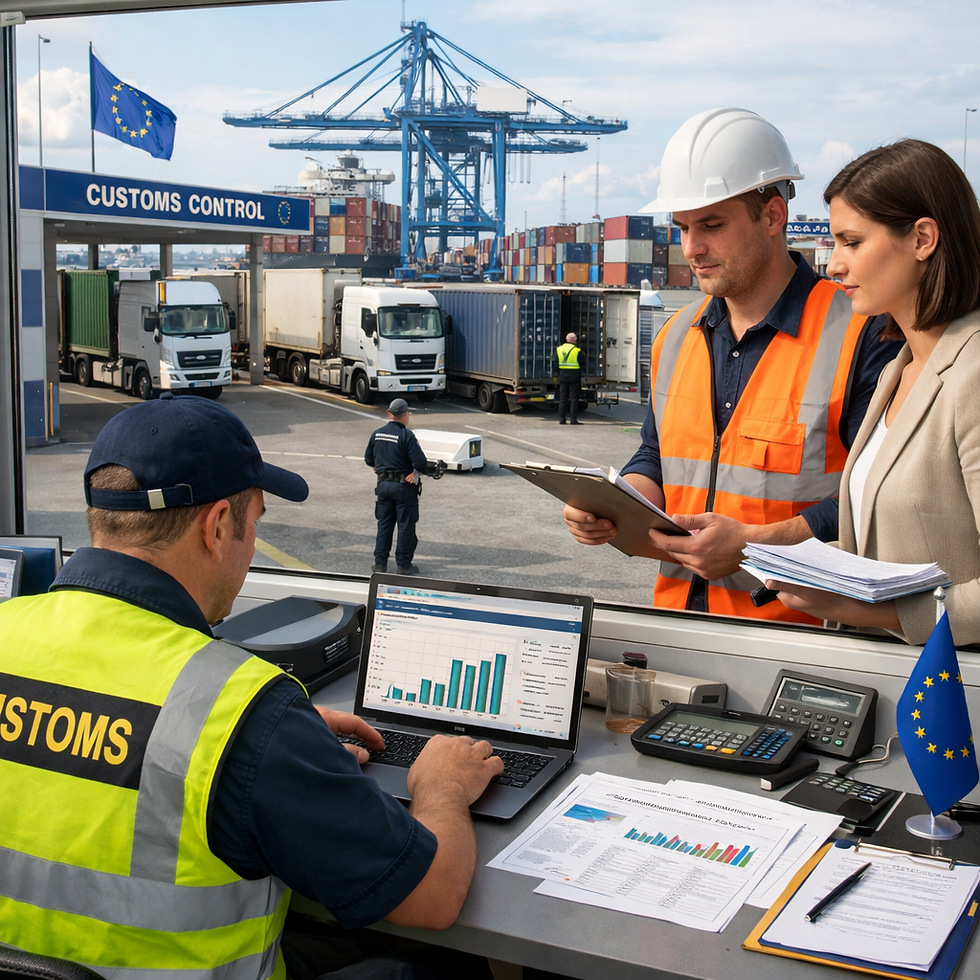
The definitive regime of CBAM kicks in on 1 January 2026, marking a critical juncture for anyone trading with the EU. The primary legislation, Regulation (EU) 2023/956, lays out the framework, while Commission Implementing Regulation (EU) 2025/2621 provides the legally binding values and specifics. The European Commission has been proactive, publishing a series of CBAM guidance documents on 14 August 2026, specifically to support the definitive period's implementation. This isn't just bureaucratic paperwork; these documents are your roadmap to avoiding penalties and ensuring smooth operations.
Understanding Your CBAM Obligations in 2026
So, what does this mean for you, the importer? The core obligation is straightforward yet complex: you must declare the embedded emissions in your imports and surrender CBAM certificates corresponding to those emissions. This isn't a one-off task; it's an ongoing commitment. The first annual CBAM declaration, covering imports made throughout 2026, is due by 30 September 2027. This gives you a significant window to collect and verify the necessary data, but it also means you need to start tracking from day one of 2026.
Not every import falls under CBAM. The mechanism specifically targets cement, iron and steel, aluminium, fertilizers, hydrogen, and electricity. If your goods are in these sectors, you need to pay close attention. Furthermore, there's an importer threshold: if you, or your indirect customs representative, import more than 50 tonnes of CBAM goods into the EU in a calendar year, you must apply for authorisation as an "authorised CBAM declarant." The Commission's assessment for the period 1 April 2025 to 31 March 2026 indicated that this 50-tonne threshold would exempt only 0.87% of embedded emissions, comfortably below the 1% limit, meaning most significant importers will be affected.
Becoming an Authorised CBAM Declarant
The status of an authorised CBAM declarant is not merely a formality; it's a legal requirement for those exceeding the 50-tonne threshold. This authorisation process will likely involve demonstrating your capacity to accurately report emissions data and fulfil your financial obligations related to CBAM certificates. The Commission emphasizes that authorisation, reporting, and certificate-surrender obligations form the core compliance steps. This means you should be exploring the application process well before 2026, understanding the criteria, and preparing any necessary documentation. Think of it as a license to import certain goods into the EU, with a carbon-conscious caveat.
The process will likely involve registering on a dedicated EU portal, similar to other customs and excise systems. This is where TendersGo can become an invaluable asset, not just for finding new opportunities but also for staying abreast of regulatory changes that impact existing contracts. Our platform, with its coverage of 220+ countries and 145 languages, provides a unique vantage point for understanding global compliance requirements, including those impacting your existing contracts. Imagine having AI summaries and unlimited alerts directly to your inbox about new CBAM guidance or portal updates – that's the kind of practical support we offer.
The Nitty-Gritty of Emissions Data: Actual vs. Default Values
Here's where the rubber meets the road for data preparation. Importers have two primary options for reporting embedded emissions: using default values provided by the Commission or using actual values. This choice has significant implications for both the workload and the potential cost of CBAM certificates.
Using default values might seem simpler initially, as it reduces the data collection burden from your third-country producers. However, these default values are often set conservatively, meaning they might be higher than your actual emissions, potentially leading to a greater number of CBAM certificates you need to purchase and surrender. This is a crucial strategic decision that needs careful consideration, potentially involving a cost-benefit analysis.
Opting for actual emissions, on the other hand, demands much more rigorous data collection and verification. If you choose this route, the producer in the third country must provide verified emissions data on the total embedded emissions. This isn't just a casual email with a number; the embedded emissions must be determined and verified in accordance with the CBAM Regulation and related guidance. For goods imported in 2026, if the actual production timing cannot be evidenced, the reporting period defaults to 2026. This detail underscores the need for robust record-keeping by your upstream suppliers.
Working with Non-EU Operators: A Collaborative Effort
The success of using actual emissions data hinges on effective collaboration with your non-EU suppliers. This isn't just about asking them for data; it's about guiding them through the EU's specific requirements. The European Commission recognized this need by publishing "Guidance Document No. 2: Quick guide for non-EU operators on CBAM implementation" in August 2026. This document is a must-read for your international partners, clarifying what they need to provide and how to calculate it.
As an importer, you might need to invest in training your suppliers or providing them with tools to accurately measure and report their emissions. This could involve agreeing on specific methodologies, implementing monitoring systems, or even engaging third-party verifiers. The relationship with your suppliers will evolve from purely transactional to one of shared compliance responsibility. For smaller producers, this could represent a significant challenge, and you, as the importer, might need to offer support to maintain your supply chain.
The CBAM Certificate Mechanism: Purchase and Surrender
Once you've declared your embedded emissions, the next step is to purchase and surrender CBAM certificates. These certificates represent the carbon price equivalent to the embedded emissions in your imported goods. Importers must purchase and surrender these certificates in 2027 for emissions embedded in 2026 imports. This creates a financial obligation that needs to be factored into your pricing and operational budgets.
The mechanism is designed to mirror the EU Emissions Trading System (ETS), ensuring that imported goods face a similar carbon cost to domestically produced goods. The price of CBAM certificates will likely be linked to the price of allowances in the EU ETS, introducing an element of market volatility. Understanding the financial implications and budgeting for certificate purchases will be a critical task for procurement teams.
Financial Planning and Risk Management
Procurement officers and bid managers need to integrate CBAM certificate costs into their financial models for 2026 and beyond. This isn't just about the purchase price; it's also about managing the risk associated with potential fluctuations in certificate prices. Forward-looking contracts might need to include CBAM clauses, outlining how these costs will be shared or absorbed. For companies tendering for EU projects, understanding and accurately quoting CBAM-inclusive prices will be a competitive differentiator. This is where a platform like TendersGo, with its extensive database of tenders, can help you identify opportunities where such detailed cost analysis is particularly valued.
Consider the impact on your cash flow. The purchase of certificates in 2027 for 2026 imports means there's a deferred cost. This needs to be adequately provisioned for. Furthermore, penalties for non-compliance or inaccurate reporting can be substantial, adding another layer of financial risk. Robust internal controls and thorough documentation are not just good practice; they are essential for financial prudence under CBAM.
Where to Find Official Guidance and Support
The European Commission is the definitive source for all CBAM-related information. Their Taxation and Customs Union CBAM pages are the official hub for legislation, guidance, definitive-regime information, and news. I’ve seen many companies get lost in unofficial interpretations or outdated information, and that's a recipe for compliance disaster. Always go to the source.
Specifically, look for the guidance documents published on 14 August 2026. "Guidance Document No. 1: Introduction to CBAM concepts" provides an essential foundation, while "Guidance Document No. 2: Quick guide for non-EU operators on CBAM implementation" is crucial for engaging your supply chain partners. These aren't light reads, but they are absolutely necessary for anyone serious about carbon border adjustment mechanism guide compliance.
Utilizing Digital Tools for Compliance
Managing the data, declarations, and certificate purchases will undoubtedly require robust digital tools. While the EU will provide its own reporting portals, companies should consider internal systems or third-party solutions that can integrate with these portals. This includes systems for tracking imported goods by CBAM category, collecting emissions data from suppliers, verifying that data, and managing the CBAM certificate lifecycle.
For SMEs, this might seem daunting. However, several service providers are emerging to offer support in this area. Look for solutions that offer audit trails, secure data storage, and easy integration with your existing ERP or customs declaration systems. The goal is to automate as much of the data collection and reporting process as possible to minimize human error and administrative burden. Platforms like TendersGo often feature B2B marketplaces where you might find such specialized compliance services, helping you connect with partners who can simplify your CBAM journey.
Preparing for the First Declaration: A Timeline Perspective
With the definitive regime starting on 1 January 2026, the clock is ticking. Your first annual declaration, covering all 2026 imports, is due by 30 September 2027. This might seem like a long way off, but the preparatory work is extensive. Here's a suggested timeline of actions:
Q4 2025: Identify all CBAM-covered goods in your import portfolio. Assess the 50-tonne threshold. Initiate communication with non-EU suppliers regarding their data collection obligations. Begin reviewing official EU guidance documents.
Q1-Q2 2026: Apply for authorised CBAM declarant status if you exceed the threshold. Establish internal processes for tracking CBAM-covered imports and collecting emissions data from suppliers. Decide whether to use actual or default emissions values.
Throughout 2026: Continuously monitor and collect emissions data for all CBAM-covered imports. Ensure robust documentation for actual emissions, including verification reports from suppliers. Train internal teams and external partners on data requirements.
Q1-Q2 2027: Consolidate all emissions data for 2026 imports. Begin preparing your first annual CBAM declaration. Engage with verifiers if necessary, especially for complex actual emissions data.
By 30 September 2027: Submit your first CBAM declaration.
Throughout 2027: Purchase and surrender the required CBAM certificates for your 2026 imports.
This timeline highlights that CBAM is not a passive compliance exercise. It demands active management, strategic decisions, and continuous engagement with your supply chain. The proactive collection of data from the very beginning of 2026 will be critical for a smooth declaration process. Remember, the EU's commitment to climate action is unwavering, and CBAM is a cornerstone of that policy. Adapting to this new reality is not just about compliance; it's about positioning your business for a carbon-conscious future in global trade.





