China Export Licensing Regime 2026: What Goods Need Approval

The global trade landscape, ever-shifting, demands constant vigilance from exporters and importers alike. For those eyeing the vast Chinese market, or indeed those shipping goods out of China, understanding the nuances of its export regulations is not just good practice – it's a fundamental requirement for smooth operations. As of January 1, 2026, China has updated its export licensing regime, bringing into effect a new catalogue of goods that require explicit approval before they can leave the country. This isn't just bureaucratic red tape; it's a critical component of China's economic and strategic policy, impacting everything from agricultural commodities to advanced industrial materials.

For bid managers, export managers, and procurement officers worldwide, navigating these China export licensing requirements 2026 is paramount. Missing a step can lead to significant delays, financial penalties, and damaged business relationships. This year's update, jointly promulgated by the Ministry of Commerce (MOFCOM) and the General Administration of Customs (GACC) in late 2025, solidifies the framework for what goods need export approval in China. Let's delve into the specifics, ensuring your shipments remain compliant and your supply chains uninterrupted.
The Legal Foundation of China's 2026 Export Licensing Regime
Every regulation has its roots in law, and China's export licensing is no different. The 2026 catalogue doesn't appear out of thin air; it's firmly anchored in a robust legal framework. Understanding these foundational documents offers insight into the rationale behind the controls and helps businesses appreciate the seriousness with which these regulations are enforced. The primary legislation governing this regime includes the Foreign Trade Law of the People’s Republic of China , which sets the overarching principles for trade. This is further elaborated by the Regulations on the Administration of Import and Export of Goods, providing detailed rules for managing the flow of goods across borders.
Beyond these broad statutes, more specialized regulations come into play. For instance, the Regulations on the Administration of Ozone-Depleting Substances directly influences the export controls on certain chemicals, reflecting China's commitment to international environmental protocols. The practical implementation of these controls is guided by the Measures for the Administration of Export Licenses, which outlines the procedural aspects of obtaining permits, and the Measures for the Management of Import and Export of Ozone-Depleting Substances, offering specific guidance for those particular goods. These legal pillars collectively form the bedrock upon which the 2026 China export license catalogue stands, ensuring a comprehensive and enforceable system for managing strategic exports.
What Goods Need Export Approval: The 2026 Catalogue Unpacked
The core of the 2026 regime lies in its list of controlled items. MOFCOM has made it clear: any goods specified in the 2026 catalogue require an Export License of the People’s Republic of China before they can clear customs. This isn't a small list; it encompasses 43 distinct categories of export goods. It's crucial for any company involved in exporting from China to meticulously check if their products fall under this purview. A quick glance might not be enough; sometimes, seemingly innocuous items can be caught in broader categories.
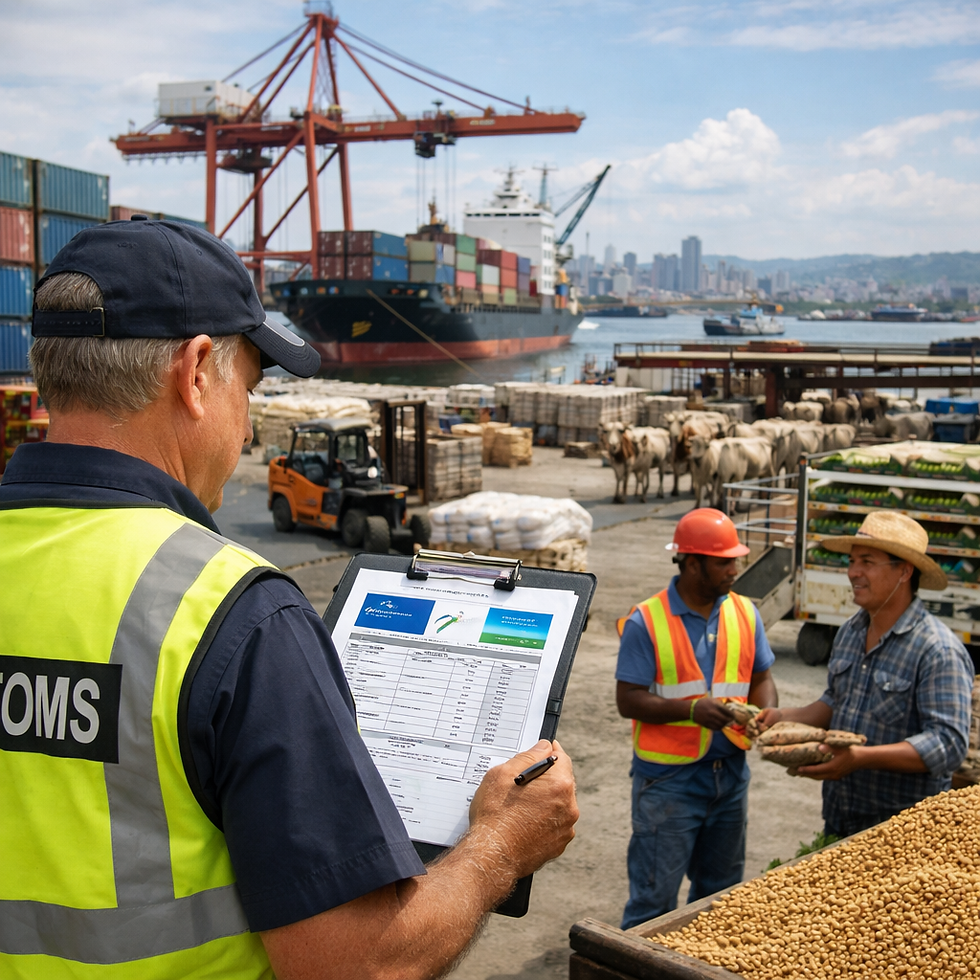
The breadth of the catalogue is quite striking, covering everything from essential foodstuffs to industrial raw materials and finished goods. For instance, agricultural staples like wheat, corn, rice, wheat flour, corn flour, and rice flour are on the list, as are various types of livestock including live cattle, live pigs, and live chickens . Moving into natural resources, we find items such as coal, crude oil, refined oil, natural sand, phosphate rock, magnesia, talc, fluorite, and rare earths . These are often considered strategic resources, underpinning China's industrial base and global supply chains.
Industrial metals and their derivatives also feature prominently, including tin and tin products, tungsten and tungsten products, antimony and antimony products, silver, platinum, indium and products, molybdenum and products, coke, and some other metals and products . Even specific manufactured goods like motorcycles and all-terrain vehicles (and their engines and frames) , along with automobiles (including complete knock-down kits and chassis) , are subject to these controls. Other notable inclusions are sawn timber, cotton, beef, pork, chicken, aluminum oxide, paraffin, sodium sulfate, silicon carbide, ozone-depleting substances, and citric acid . This diverse array underscores the strategic importance China places on managing its outbound trade for various economic, environmental, and security reasons. Exporters should consult the official MOFCOM announcement for the definitive and most current China export license catalogue 2026.
Navigating the Application Process: Who Issues What?
Once you've identified that your goods require an export license, the next critical step is knowing where to apply. China's licensing system is decentralized to some extent, with different agencies responsible for issuing licenses based on the product category. This specialization aims to streamline the process but requires applicants to correctly identify the relevant authority. Incorrect submissions will inevitably lead to delays.
For significant commodities that often have national strategic importance, the License Bureau within MOFCOM handles approvals. This includes items such as wheat, corn, coal, crude oil, refined oil (with specific exclusions for certain lubricant exports under general trade), and cotton . The License Bureau also processes licenses for enterprises directly administered by the State-owned Assets Supervision and Administration Commission in Beijing, indicating a centralized approach for key state-owned entities.
A broader range of goods falls under the purview of MOFCOM’s local special commissioner offices, officially known as MOFCOM驻有关地方特派员办事处 . These regional offices manage licenses for items like live cattle, live pigs, live chickens, rice, wheat flour, corn flour, rice flour, ephedra herb, licorice and licorice products, natron grass and products, natural sand, phosphate rock, magnesia, talc, tin, tungsten, antimony, sawn timber, silver, platinum, and indium products . This distribution reflects a pragmatic approach, allowing regional expertise to handle locally significant exports.
Finally, a substantial portion of the licensing workload is delegated to Provincial commerce departments or sub-provincial city commerce departments . These local bodies are responsible for issuing licenses for goods such as beef, pork, chicken, aluminum oxide, fluorite, rare earths, molybdenum and products, coke, refined oil (specifically for certain lubricant exports), paraffin, some metals and products, sodium sulfate, silicon carbide, ozone-depleting substances, citric acid, motorcycles, and automobiles (including complete knock-down kits and chassis) . This tiered system means exporters must first identify their product, then cross-reference it with the correct issuing agency to ensure a smooth application. The official MOFCOM announcement on 2026 import-export license issuing agencies provides the definitive breakdown, accessible via mofcom.gov.cn under “商务部公告2026年第7号”.
The Application Rule and Dual-Use Item Overlays
Regardless of the specific issuing agency, the general application rule remains consistent: foreign trade operators looking to export catalogue goods must apply to MOFCOM or a MOFCOM-authorized local commerce department for the export license. This license is then presented for customs release. It's a two-step process: secure the license, then secure customs clearance. Attempting to clear customs without the requisite license for listed goods will simply not work.
An important compliance overlay exists for items that might also fall under China's dual-use export control regime. If an export item is on the Dual-Use Items and Technologies export control list , a separate dual-use export license is required first. This means some goods might need two distinct licenses before export. This is a critical point that can easily be overlooked, leading to significant delays. The dual-use controls apply to goods and technologies that have both civilian and military applications, reflecting China's commitment to non-proliferation and national security concerns. Exporters must diligently check both lists to ensure full compliance. Tools like TendersGo.com, the world's largest tender search engine with data from 220+ countries and 145 languages, can help identify relevant regulations and requirements, offering AI summaries and unlimited alerts to keep businesses informed.
Practicalities of the Export License: Validity and Declarations
Understanding the application process is one thing, but knowing how the issued license functions in practice is another. The 2026 catalogue introduces some practical nuances regarding license usage, particularly concerning how many times a single license can be used for customs declarations. This flexibility can significantly ease logistical burdens for high-volume exporters.
For many goods, an export license is typically a one-time-use document, meaning each shipment requires a new license. However, the 2026 catalogue notes that some goods are classified as "non-one-item-one-license." This designation is a welcome development for exporters dealing with certain high-volume commodities. Specifically, goods including wheat, corn, rice, crude oil, and new automobiles may be cleared multiple times within the license validity period. This can extend up to a maximum of 12 customs declarations per single license. This feature is particularly beneficial for continuous supply chains, reducing the administrative overhead associated with frequent applications. Exporters of these specific goods should confirm this status during their application process to maximize efficiency.
Keeping track of license validity periods and declaration limits is essential for compliance. Overlooking these details could lead to expired licenses or exceeding the permitted number of declarations, resulting in customs refusal. This kind of detail is precisely where a platform like TendersGo.com can assist, offering PDF viewing of official documents and saved searches to keep track of specific requirements and updates.
Staying Current: Official Sources and Policy Changes
In the dynamic world of international trade, policies are rarely static. China's export licensing regime is no exception. The 2026 catalogue itself is a testament to this, having replaced the prior 2025 version and simultaneously superseding all related 2024 announcements. This continuous evolution means that relying on outdated information is a recipe for compliance issues. The effective date of January 1, 2026, is crucial; any shipments after this date must adhere to the new rules.
For accurate and up-to-date information, direct consultation of official sources is indispensable. The Ministry of Commerce (MOFCOM) website is the authoritative portal. Specifically, the 2026 announcement page for the export catalogue notice can be found on mofcom.gov.cn under the notice titled “公布《出口许可证管理货物目录(2026年)》”. This page provides the definitive list of goods requiring licenses. Furthermore, details on the issuing authorities are published at mofcom.gov.cn under “商务部公告2026年第7号”. These direct links are invaluable for bid managers and procurement officers needing to verify information directly from the source.
The MOFCOM policy-summary page for “出口许可证管理货物目录(2026年)” also confirms the 43-item scope and reiterates the pre-licensing rule for dual-use items. Regularly checking these official channels is the only way to ensure ongoing compliance. Platforms like TendersGo.com, with its extensive database, CPV/NAICS codes, and B2B marketplace, can help professionals stay abreast of such changes, offering a free 30-day trial to explore its capabilities in tracking global procurement and trade regulations.
Preparing for Export: A Checklist for Compliance
With the 2026 China export licensing regime now fully in effect, a systematic approach to compliance is more important than ever. Exporters need to integrate these requirements into their standard operating procedures to avoid costly disruptions. Here’s a practical checklist to guide your preparations:
Identify Your Goods: First and foremost, meticulously review your product portfolio against the official 2026 China export license catalogue. Do any of your goods fall into the 43 categories requiring an export license? Be precise; sometimes, a product's description might seem generic but falls under a specific controlled category.
Check for Dual-Use Status: If your goods are on the export license catalogue, also cross-reference them with China's Dual-Use Items and Technologies export control list. If they appear on both, remember you'll need to secure the dual-use license first, followed by the standard export license. This sequential process is non-negotiable.
Determine the Issuing Authority: Once you know your goods require a license, identify the correct issuing agency. Is it MOFCOM's License Bureau, a MOFCOM local special commissioner office, or a provincial/sub-provincial commerce department? Submitting to the wrong agency will cause significant delays.
Gather Required Documentation: While specific documents can vary, generally expect to provide detailed product specifications, end-user certificates, contracts, company registration documents, and potentially other supporting materials. Prepare these in advance and ensure they are accurate and complete.
Understand License Characteristics: For goods like wheat, corn, rice, crude oil, and new automobiles, confirm if they qualify as "non-one-item-one-license" goods. If so, understand the maximum number of customs declarations (up to 12) allowed per license and plan your shipments accordingly.
Monitor Official Announcements: Regularly check the MOFCOM website for any updates, amendments, or new announcements related to export controls. Policies can evolve, and staying informed is your best defense against non-compliance.
Leverage Technology: Utilize platforms like TendersGo.com to track global trade regulations, set up alerts for specific keywords related to Chinese export controls, and access official documents. The AI summaries and multi-language support can be invaluable for international teams.
By systematically addressing each of these points, businesses can significantly mitigate risks and ensure their export operations from China remain compliant and efficient in 2026 and beyond. The landscape of international trade is complex, but with diligent preparation and access to accurate information, navigating China's export licensing regime becomes a manageable, rather than daunting, task.