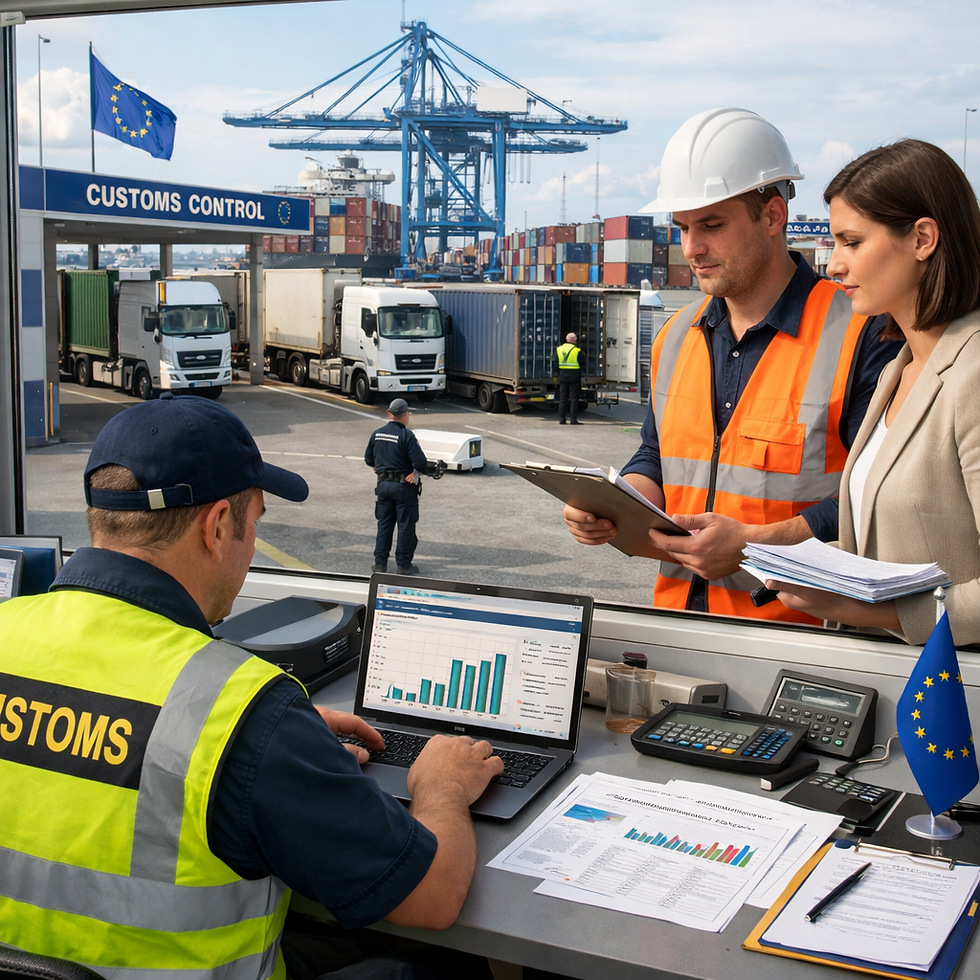
How to Bid on Germany Government Tenders in 2026

Germany, a powerhouse of European industry and innovation, presents a vast and intricate landscape for businesses looking to secure government contracts. For those aiming to participate in Germany government tenders in 2026, understanding the regulatory framework, key platforms, and procedural nuances is absolutely essential. It’s not just about finding the right tender; it’s about navigating a system built on precision, transparency, and adherence to both national and European Union procurement rules.

Having spent years observing public procurement across continents, I can tell you that Germany’s system, while robust, demands meticulous attention to detail. The sheer volume of opportunities – over 16,831 active solicitations counted as recently as September 4, 2026, and 6,229 open notices in August 2026 – underscores the potential for businesses worldwide. But how do you, as a bid manager or export professional, effectively tap into this market? Let’s break it down.
The German Procurement Framework: A Dual Approach
Germany’s public procurement system operates under a dual legal framework, meticulously integrating national laws with the broader directives of the European Union. At its core is the Act Against Restraints of Competition (GWB) , which serves as the primary legislative instrument for implementing EU Public Procurement Directives into German national law. This means that if you’re familiar with EU procurement principles, you’re already halfway there.
Beneath the GWB, several specific regulations detail the procedural aspects. For contracts above certain EU thresholds, the Public Procurement Regulation (VgV) dictates the rules for supplies and services. Construction works, a significant segment of public spending, fall under the VOB/A (Vergabe- und Vertragsordnung für Bauleistungen – Part A). For contracts that fall below the EU thresholds, the UVgO (Unterschwellenvergabeordnung) provides the procedural guidelines. This layered approach ensures that whether you’re bidding on a multi-million euro infrastructure project or a smaller supply contract, there’s a clear legal path to follow.
It’s also crucial to be aware of upcoming legislative changes. The Public Procurement Acceleration Act is set to enter into force on July 1, 2026. This act specifically targets public procurement above the EU thresholds and will introduce modifications to the GWB, VgV, and SektVO (the Sector Ordinance). These new rules will apply to all procurement procedures initiated from July 1, 2026, onwards. Staying abreast of such legal updates is not merely good practice; it’s a necessity for compliance and competitive bidding.
Understanding EU Thresholds for 2026/2027
The distinction between above-threshold and below-threshold contracts is vital, as it dictates which procedural rules apply and where tenders are advertised. For 2026 and 2027, the EU-threshold procurement values are set as follows:
Works: EUR 5.404 million
Supplies/Services: EUR 216,000
Sectoral Entities: EUR 432,000
Central Authorities (Supplies/Services): EUR 140,000
Social and Specific Services: EUR 750,000
If your bid exceeds these figures, your tender will be subject to the full suite of EU procurement regulations, including mandatory publication in the Official Journal of the European Union via TED (Tenders Electronic Daily). This broadens the competitive landscape but also offers greater transparency and a more standardized process for international bidders. For those below these thresholds, national rules and platforms take precedence, though many national portals often cross-list opportunities.
Where to Find German Government Tenders in 2026
Finding the right tender in Germany can feel like searching for a needle in a haystack, especially given that German public tenders are distributed across more than 4,500 procurement portals. However, several key platforms act as central hubs, making your search more efficient. As a journalist who’s seen countless tender portals, I can attest that consolidating your search efforts is key.
For opportunities above the EU thresholds, your first port of call should always be TED (Tenders Electronic Daily) , the online version of the "Supplement to the Official Journal of the European Union." This is where all high-value EU-wide tenders are mandated to be published. If you’re targeting significant contracts, TED is non-negotiable.
Domestically, Germany’s leading e-procurement platform is the Deutsches Vergabeportal (DTVP) . This platform claims to host nearly 100% of public tenders from German contracting authorities. With over 5,000 contracting authorities and more than 160,000 companies worldwide using it, DTVP is an indispensable resource. Their dedicated tenderer portal, en.dtvp.de/tenderers/ , is designed to facilitate access for bidders. I've seen many national platforms, and DTVP is certainly one of the more comprehensive ones.
Beyond DTVP, several other federal and regional platforms are crucial:
oeffentlichevergabe.de: This is the federal Bekanntmachungsservice, operated by the Beschaffungsamt des BMI, and uses the eForms-DE standard. It’s a primary publication point for federal procurement notices.
bund.de: Specifically, you can find federal-level procurement notices at service.bund.de/IMPORTE/Ausschreibungen. This is another essential site for federal opportunities.
evergabe-online.de: This is the federal e-procurement platform where many federal tenders are published and processed.
Furthermore, organizations like GIZ (Deutsche Gesellschaft für Internationale Zusammenarbeit) often publish tenders on their own e-procurement platforms, in addition to bund.de and TED for EU-wide tenders. It’s a reminder that a multi-pronged search strategy is often the most effective.
And let's not forget the regional level. Germany’s federal structure means that individual states (Länder) also maintain their own procurement portals. Examples include Vergabe.NRW for North Rhine-Westphalia and Vergabe.Bayern for Bavaria. If you have a specific regional focus, these state portals are invaluable. For a truly exhaustive search, a platform like TendersGo.com , the world's largest tender search engine, can be incredibly useful, aggregating opportunities from 220+ countries and 145 languages, offering AI summaries, unlimited alerts, and PDF viewing, saving you the legwork of checking dozens of individual sites.
Navigating German Tender Procedures and Timelines
Once you’ve identified a promising tender, understanding the specific procedure and adhering to strict timelines is paramount. German procurement, influenced heavily by EU directives, utilizes several standardized procedures, each with its own characteristics and deadlines.
The most common procedure is the open procedure , which, as its name suggests, allows any interested party to submit a bid. This is often the most straightforward for new entrants. Beyond this, other methods include:
Restricted procedure: Here, only selected candidates are invited to submit tenders after an initial pre-qualification stage.
Competitive procedure with negotiation: This allows for negotiation with selected bidders to refine offers.
Competitive dialogue: Used for complex contracts where the contracting authority cannot define the technical means or legal/financial make-up of the project. Dialogue takes place with selected candidates.
Innovation partnership: Designed for the development and subsequent purchase of innovative products, services, or works.
Negotiated procedure without prior call: This is reserved for exceptional circumstances, such as extreme urgency or when only one supplier can provide the required goods/services.
Each procedure comes with minimum timeframes that contracting authorities must observe. These are critical for bidders to plan their response effectively:
Open procedures: A minimum of 30 days for bid submission.
Restricted procedures: A minimum of 30 days for requests to participate, followed by a minimum of 25 days for tenders.
Competitive procedure with negotiation and competitive dialogue: A minimum of 30 days for requests to participate, followed by a minimum of 25 days for initial tenders.
These timelines are non-negotiable. Missing a deadline, even by a minute, typically results in disqualification. My advice to anyone bidding internationally is to always factor in extra time for translation, legal review, and technical submission issues. German procurement culture values punctuality and precision above almost all else.
Essential Documentation and Language Requirements
Preparing a bid for a German government tender requires meticulous documentation. While the exact requirements will vary based on the tender, several common types of documents are almost always requested:
Company registration documents: Proof of legal existence and registration in your home country.
Financial statements: Demonstrating financial stability and capacity to undertake the contract. Often, authorities will ask for turnover figures for the last 2-3 years.
Technical capacity and experience: References from previous, similar projects, CVs of key personnel, and certifications relevant to the industry (e.g., ISO certifications).
Declarations: These often include declarations of non-collusion, compliance with social and environmental standards, and absence of conflicts of interest. The European Single Procurement Document (ESPD) is commonly used across the EU to simplify initial declarations.
Insurance certificates: Proof of relevant liability insurance.
Tax clearance certificates: Demonstrating compliance with tax obligations.
A crucial aspect often overlooked by international bidders is the language requirement. While some larger, international tenders might offer documentation in English, the default language for German public procurement is German. All official correspondence, bid submissions, and supporting documents will typically need to be in German. This isn't just about translation; it's about ensuring legal and technical accuracy in the translated documents. Engaging professional translators with experience in legal and technical German is not an expense; it’s an investment that can prevent disqualification.
Electronic submission is the norm, with platforms like DTVP and evergabe-online.de providing secure portals for uploading documents. Familiarize yourself with these systems well in advance of the submission deadline. Technical glitches can happen, and you don't want to be scrambling at the last minute.
Tips for Success in the German Public Procurement Market
Competing successfully in the German public procurement market demands more than just a competitive price. It requires a strategic approach and an understanding of local expectations. Here are a few insights I’ve gathered over the years: Thorough Research is Key: Don't just look at the tender document. Research the contracting authority, their previous projects, and their strategic objectives. Understanding their needs beyond the immediate scope of the tender can help you tailor a more compelling offer. Build Local Partnerships: For foreign companies, partnering with a local German entity can provide invaluable insights into local regulations, business culture, and supply chains. It can also enhance your credibility with contracting authorities. Focus on Quality and Compliance: Germans value quality, reliability, and strict adherence to specifications. Emphasize how your offering meets or exceeds technical requirements and how you ensure compliance with all relevant standards (e.g., DIN norms). Clarity and Precision in Bids: Your bid document should be clear, concise, and precise. Avoid ambiguity. Ensure all sections are fully completed and all requested documents are attached in the correct format. A well-structured and easy-to-read bid makes a positive impression. Understand Evaluation Criteria: Always pay close attention to the evaluation criteria outlined in the tender documents. Your bid should directly address each criterion, demonstrating how you fulfill them. It’s not just about what you offer, but how you present it in relation to their scoring system. Leverage Technology: Use platforms like TendersGo.com to set up unlimited alerts based on CPV/NAICS codes, keywords, and regions. This ensures you don't miss relevant opportunities, especially given the fragmented nature of German tender publication across thousands of portals. The AI summaries and B2B marketplace features can also give you a significant edge.
The German public procurement market, with its strong emphasis on transparency, quality, and legal compliance, offers significant opportunities for businesses that are prepared to meet its rigorous standards. By understanding the legal framework, utilizing the correct platforms, meticulously preparing documentation, and respecting cultural nuances, you can position your company for success. The journey might seem daunting, but with a structured approach, the rewards are substantial. Remember, the market is active, diverse, and constantly evolving, presenting a continuous stream of opportunities for those ready to bid.