
How to Bid on Brazil Government Tenders in 2026

Brazil, a land of immense opportunity and a vibrant economy, consistently ranks among the top global markets for public procurement. For bid managers, export managers, and project developers worldwide, understanding how to navigate the intricacies of Brazil government tenders in 2026 is not just an advantage; it’s a necessity. From federal infrastructure projects to vital public services, the Brazilian government procures a vast array of goods and services, making it a lucrative, albeit complex, arena for international suppliers.
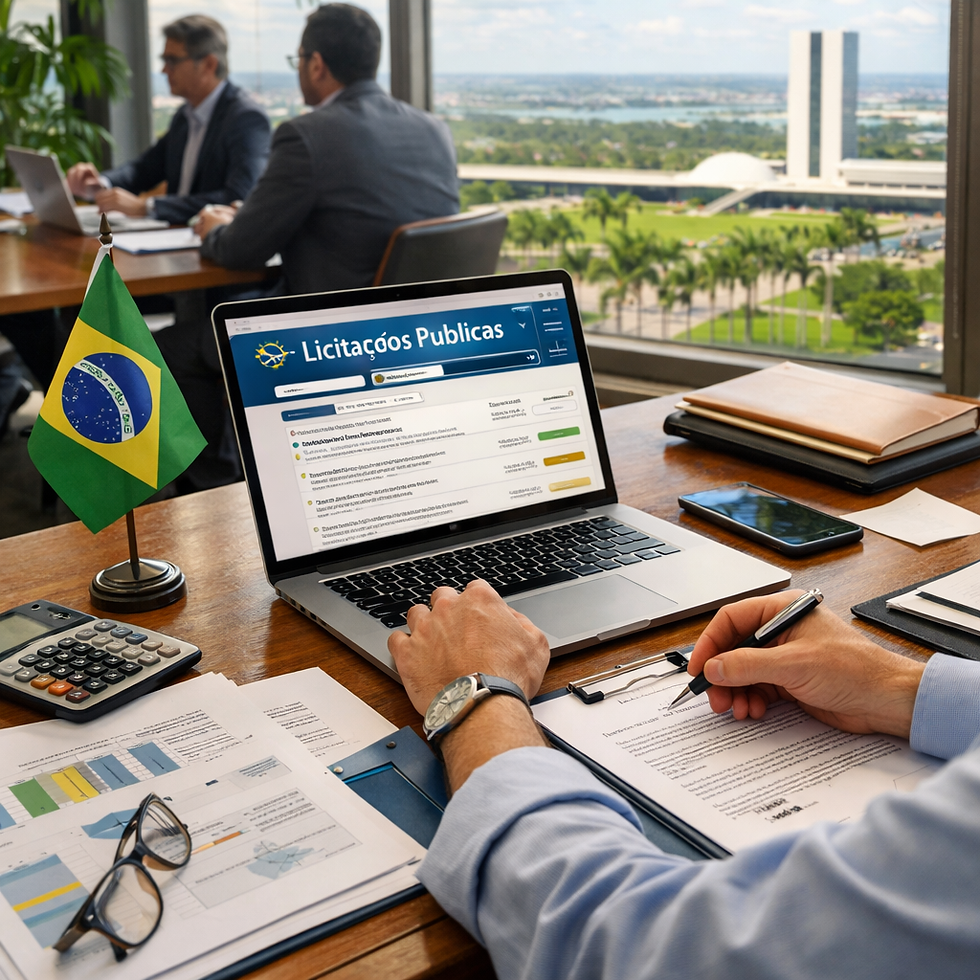
My years reporting from the field have taught me that success in any public tender process, especially in a market as dynamic as Brazil, hinges on meticulous preparation and an in-depth understanding of local procedures. This isn't just about translating documents; it's about grasping the underlying cultural nuances of procurement, the regulatory framework, and the specific technological platforms used. Let's delve into the practical steps and crucial details you'll need to consider when pursuing Brazil public procurement opportunities this year.
Understanding the Brazilian Procurement Landscape: Federal vs. Regional
Brazil’s federal structure means procurement isn't a monolithic entity. While our focus today is primarily on federal tenders, it’s important to acknowledge that states and municipalities also conduct their own procurement processes, often with variations in rules and platforms. For federal opportunities, the primary e-procurement system is Compras.gov.br . This portal serves as the central hub for federal tender notices, electronic auctions, and all related bidding actions. Think of it as the digital storefront for the Brazilian federal government’s purchasing needs.
Beyond the primary portal, federal tenders are also officially published in the Diário Oficial da União, Brazil's equivalent of a federal register. While Compras.gov.br is your operational platform, the Diário Oficial da União provides the official legal publication. For broader search and monitoring, the PNCP (Portal Nacional de Contratações Públicas) acts as a comprehensive national portal, offering alerts and a wider view of procurement opportunities across different governmental levels. My advice? Monitor both the PNCP for overarching visibility and Compras.gov.br for the granular details of federal bids you’re targeting.
Essential First Steps: Registration and Digital Certificates
Before you can even think about submitting a proposal, you must establish your eligibility within the Brazilian federal system. For federal bidding, participation commonly requires registration in SICAF (Unified Supplier Registration System), which is an integral part of the Compras.gov.br environment. SICAF isn't just a database; it’s a pre-qualification gatekeeper, verifying your fiscal compliance, technical qualification, and legal standing. Without a valid SICAF registration, your bid simply won't be considered.
One federal auction notice I reviewed explicitly stated that SICAF compliance was required by the third business day prior to the scheduled bid receipt date. This isn't a formality you can rush at the last minute. The process takes time, and bureaucratic hurdles, while improving, can still arise. Furthermore, accessing these platforms and ensuring secure, legally binding submissions requires a digital certificate. Suppliers should obtain an e-CNPJ digital certificate, issued by an ICP-Brasil-accredited authority. This certificate is your digital signature, essential for platform access, registration, and legally binding electronic submissions. Consider it your key to unlocking the Brazilian procurement system.
Navigating the Bidding Workflow and Timelines in 2026
The federal bidding workflow in Brazil follows a fairly structured sequence, and understanding the typical durations for each stage is crucial for effective planning. A practical 2026 bidding sequence I’ve seen outlined involves several distinct phases, each with its own set of tasks and timeframes:
Identify Opportunity: This is where your market intelligence comes in. Daily monitoring of PNCP and Compras.gov.br auction listings is key. This initial review period can range from 1 to 14 days.
Pre-qualification/Certificate Checks: This involves ensuring your SICAF registration is up-to-date and all necessary certificates are in order. Budget 7 to 30 days for this, especially if any renewals or updates are needed.
Proposal Preparation: This is often the most time-consuming phase. Developing comprehensive technical and financial proposals, tailored to the specific requirements of the tender dossier, typically takes 3 to 12 weeks.
Arranging Guarantees/Bonds: Many tenders require bid bonds or other financial guarantees. Securing these can take 2 to 4 weeks.
Bid Submission: The actual window for electronic bid submission can be surprisingly short, ranging from 1 to 30 days. Pay close attention to the exact deadline and time.
Evaluation/Challenges: After submission, the government evaluates proposals. This stage, including any clarification requests or potential challenges from competitors, can last 7 to 60 days.
Award and Contract Signature: Once a winner is selected, the period from award notification to contract signing is usually 7 to 60 days.
Mobilization: Finally, getting your operations ready to commence work can take anywhere from 15 to 120 days, depending on the project's complexity.
My experience tells me that these timelines are estimates; external factors can always cause delays. Build in buffer time, especially for your first few bids, and don't underestimate the time needed for document preparation and translation.
Electronic Bid Submission: The Norm for Federal Tenders
In 2026, electronic bid submission is the standard for federal tenders. A federal auction notice I reviewed explicitly instructed bidders to submit proposals exclusively through the electronic system by the date and time set for the public session. This isn't an option; it's a mandate. The system will typically require you to enter specific details, such as unit price, total price, brand, and manufacturer. Ensure your team is proficient with the Compras.gov.br platform well in advance.
Brazilian electronic auctions often employ an "open and closed" bidding mode. This means there's an initial public phase where successive bids are placed, often in a competitive, real-time environment, followed by a final closed bid stage. This dynamic process requires bidders to be attentive and responsive. Understanding the mechanics of these electronic auctions, including how to react to competitor bids and when to place your best and final offer, is critical for success. Practice runs on simulated environments, if available, can be invaluable.
Considerations for Foreign Bidders: Local Presence and Documentation
This is often where international companies face the most questions. Can you bid directly, or do you need a local entity? The guidance I've seen in 2026 offers slightly conflicting advice, underscoring the importance of checking each specific edital (tender document). One guide suggests foreign companies may bid without a local entity before the award, with local presence needed only if they win the contract. This can be an attractive option for initial market entry.
However, another guide advises that foreign companies should establish a Brazilian subsidiary or partner with a local entity and obtain a CNPJ (Cadastro Nacional da Pessoa Jurídica – Brazil's corporate tax ID) before bidding. My recommendation, based on years of observing these processes, is to verify this against the specific tender document. When in doubt, or for larger, long-term contracts, establishing a local presence or partnering with a reputable Brazilian company often smooths the path, particularly for contract execution and managing local tax and labor laws.
Regardless of whether you bid directly or through a local entity, prepare for a comprehensive documentation requirement. Commonly cited items for foreign bidders include:
Incorporation documents (articles of incorporation, bylaws, etc.)
Power of attorney (if an agent is representing the company)
Tax compliance certificates (both from your home country and potentially Brazil)
Financial statements (audited, demonstrating financial solvency)
Technical capability certificates (proof of experience and qualifications relevant to the tender)
Bid bonds or bid insurance
Sworn Portuguese translations for all corporate documents. This is non-negotiable; official, sworn translations are a legal requirement.
The specific federal police procurement notice on Gov.br, for example, confirms participation through SICAF and the Federal Government Procurement System, emphasizing the need for bids to be submitted through the electronic system by the opening of the public session. This highlights the consistent requirements across federal agencies.
Finding Opportunities and Strategic Intelligence
Identifying the right opportunities is half the battle. As mentioned, daily monitoring of PNCP and Compras.gov.br is essential for federal contracts. But how do you go beyond just seeing a tender and actually understand the market dynamics?
This is where strategic intelligence comes into play. The Painel de Compras is an invaluable federal market research tool. It allows you to analyze federal spending, identify procuring entities, see historical contract values, and even discover which suppliers have won similar contracts in the past. This kind of data can inform your pricing strategy, help you identify potential partners, and give you a clearer picture of the competitive landscape.
Another powerful resource for discovering Brazil government tenders, alongside opportunities from 220+ countries, is TendersGo.com . As the world's largest tender search engine, it aggregates notices in 145 languages, offering AI summaries, unlimited alerts, and PDF viewing. Their CPV/NAICS codes, B2B marketplace, and saved searches are particularly useful for pinpointing relevant tenders quickly. I've seen countless companies use platforms like TendersGo to streamline their opportunity identification process, making it far more efficient than manually sifting through dozens of government portals. They even offer a free 30-day trial, which can be an excellent way to test the waters and see the breadth of opportunities available.
In my years covering international procurement, I’ve often seen companies stumble not because they lack capability, but because they lack precise, timely information. Leveraging tools and platforms that provide comprehensive tender data and market insights is no longer a luxury; it's a strategic imperative for anyone serious about winning Brazil government tenders in 2026.





