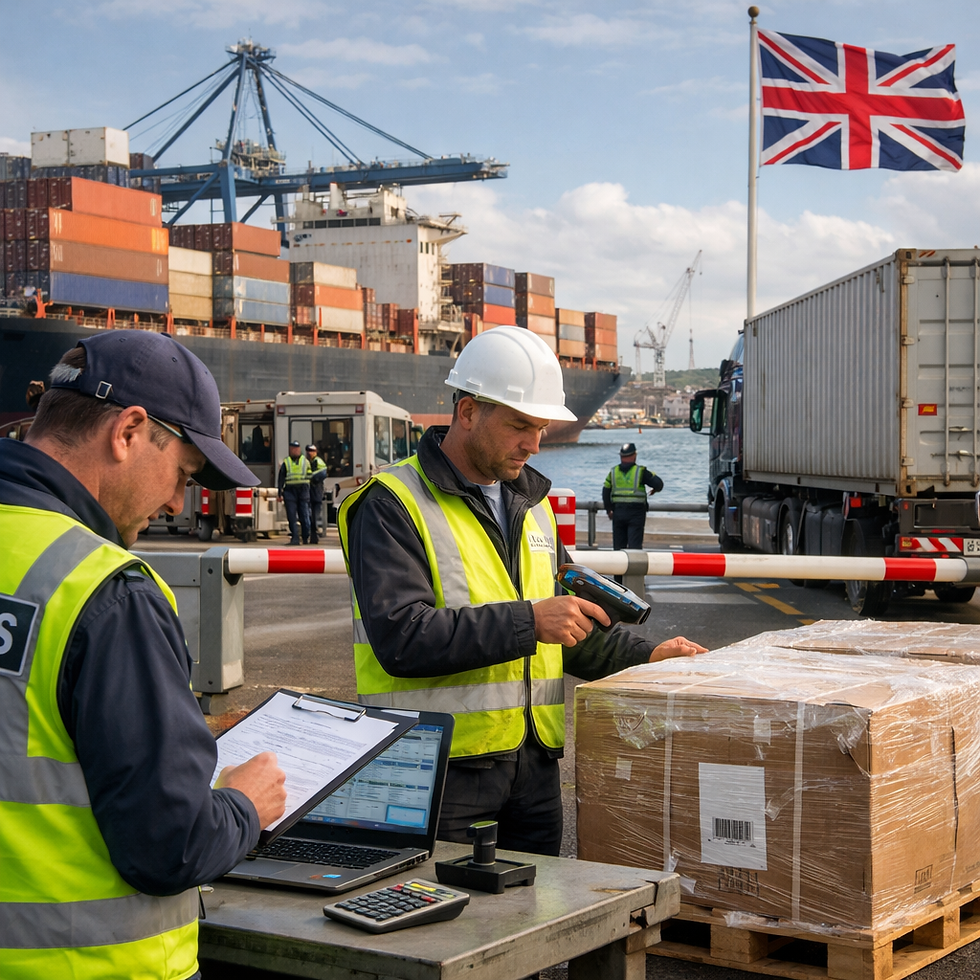
EU Anti-Dumping Duties 2026: Calculation Guide

Navigating the complexities of international trade requires a keen understanding of various regulatory frameworks, and for businesses importing into the European Union, anti-dumping duties are a critical element. As we move through 2026, the EU's approach to these duties continues to evolve, presenting both challenges and opportunities for importers, bid managers, and procurement officers. This guide aims to demystify the calculation of EU anti-dumping duties in 2026, offering practical insights into how these tariffs are assessed and what steps businesses can take to ensure compliance and mitigate risks.

Understanding how to assess anti-dumping tariffs in the EU is not merely an academic exercise; it directly impacts pricing strategies, supply chain decisions, and ultimately, profitability. The European Commission, through its Directorate-General for Trade, remains vigilant in protecting Union industries from unfair trade practices. This means that any entity involved in international trade with the EU must be prepared for the possibility of anti-dumping investigations in Europe, and equipped to understand the nuances of the calculation methodologies involved.
The EU's Investigation Process: A Timeline for Importers
When the European Commission initiates an anti-dumping investigation, it sets in motion a detailed, often lengthy, process designed to determine whether dumping has occurred and if it has caused injury to EU industries. For businesses, knowing this timeline is essential for planning and responding effectively. Investigations typically have a maximum duration of 14 months from initiation to the publication of definitive results in the Official Journal. This period is intensive, involving data collection, analysis, and consultations with all interested parties.
The dumping margin, a central component of the duty calculation, is determined over a specific "investigation period." This period usually spans between 6 months to 1 year, concluding shortly before the investigation officially begins. This timeframe is crucial for companies to understand, as it dictates the specific transaction data and financial records that the Commission will scrutinize. Importers and exporters should ensure their documentation for this period is meticulous and readily accessible, as it forms the bedrock of their defense or justification during the investigation.
EU Anti-Dumping Duties Calculation 2026: Decoding the Methodologies
The core of any anti-dumping measure lies in the calculation of the dumping margin, which represents the difference between an export price and the "normal value" of a like product in the exporting country. The EU primarily employs three methodologies for this calculation, though one stands out as the standard approach. The primary method is the weighted-average to weighted-average method . This involves comparing the weighted-average export price of all transactions to the EU during the investigation period against the weighted-average normal value in the exporting country.
While less common, the Commission may also resort to the individual transaction to individual transaction method or the weighted-average to individual transaction method . These alternative approaches are typically used in specific circumstances, such as when export prices vary significantly among different purchasers or regions. Understanding which method might apply to your specific case can be complex, often requiring expert advice. However, the default remains the weighted-average comparison, reflecting the EU's preference for a comprehensive assessment across all relevant transactions.
Injury Margin and Duty Determination: Balancing Protection with Trade
Beyond simply identifying dumping, EU authorities must also establish that dumped imports have caused "material injury" to the Union industry. This is where the injury margin comes into play. The injury margin is calculated by comparing the selling price of a Union producer with the price of the dumped imports into the EU, expressed as a percentage of the CIF (Cost, Insurance, and Freight) Union frontier price. This comparison reveals the extent to which dumped imports are undercutting or suppressing the prices of EU-produced goods, thereby harming domestic producers.
The duty level itself is then determined by a principle known as the "lesser duty rule." Generally, anti-dumping duties correspond to the dumping margin found. However, if the injury margin is lower than the dumping margin, the duty is set at the injury margin level. This rule aims to impose duties only to the extent necessary to remove the injury to the EU industry, rather than simply matching the full dumping margin, reflecting a delicate balance between protecting domestic industries and avoiding excessive trade restrictions.
Alternative Calculation for Market Distortions: A Post-2017 Shift
A significant shift in the EU's anti-dumping methodology occurred in December 2017, introducing an alternative calculation method for imports from countries where state interference significantly distorts the market. This change acknowledges that in certain economies, domestic prices and costs may not accurately reflect market realities due to government intervention. In such cases, the traditional normal value calculation becomes unreliable.
Under this alternative methodology, the Commission applies undistorted benchmarks to determine the normal value. These benchmarks might involve using prices or costs from an appropriate third country, international prices, or even a constructed value based on undistorted costs of production and sale. This approach is applicable to all WTO Members where significant market distortions are found, signaling a more robust stance against state-led economic models that undermine fair competition. For importers, this means increased scrutiny on the origin of goods from specific countries and a potential for duties to be calculated based on factors beyond the exporting country's domestic market prices.
Types of Anti-Dumping Measures: Beyond Ad Valorem
When anti-dumping measures are imposed, they can take several forms, each designed to counteract the effects of dumping. The most common type is the ad valorem duty , which is a percentage-based tariff applied to the value of the imported goods. This is straightforward and widely understood, making it a frequent choice for the Commission.
However, the EU also employs other forms of duties and measures. These can include a fixed or specific amount duty , where a set monetary value is applied per unit of the imported product, regardless of its price. Minimum import price requirements can also be imposed, stipulating that goods cannot be imported below a certain price point. Another important measure is price undertakings , where exporters voluntarily agree not to sell their products below a minimum price in the EU market. This can be an attractive alternative for exporters looking to avoid the imposition of duties, offering a degree of flexibility and control over their pricing strategies.
2026 Compliance Updates: What Importers Need to Know
The regulatory landscape is never static, and 2026 brings its own set of updates and clarifications for EU anti-dumping duties. A new regulation, directly applicable across all Member States, entered into force on February 6, 2026. This regulation likely consolidates previous amendments and introduces new provisions, making it essential for businesses to consult the latest official texts. The EU has also confirmed definitive anti-dumping duties on specific products like valine and ABS, along with mandatory steel wire registration requirements. These specific measures highlight the continuous monitoring and responsiveness of the Commission to protect EU industries.
A key aspect of the EU's enforcement mechanism that continues to be relevant in 2026 is the automatic import registration in trade defense investigations. This mechanism allows the Commission to collect detailed import data even before definitive duties are imposed. This creates an immediate "chilling effect" on trade flows, as importers become aware that duties might be retroactively applied once an investigation concludes. This emphasizes the need for proactive monitoring of potential investigations and understanding the implications of such registration requirements, especially for customs anti-dumping for SMEs in the EU.
Key 2026 Enforcement Trends: Increased Scrutiny and Higher Duties
Looking ahead in 2026, several enforcement trends suggest increased vigilance from the European Commission. Imports from countries experiencing regional overcapacity are expected to face heightened scrutiny. This means that duty-calculation methodology adjustments are likely to be made in such cases, often resulting in higher duties . The Commission's focus here is on ensuring that global imbalances, particularly those driven by overproduction in specific regions, do not translate into unfair trade practices that harm EU industries.
The EU anticipates sustained recourse to investigations in sectors globally impacted by imbalances, with sharper attention to injury analyses and circumvention-deterrent measures. This indicates a proactive stance, where the Commission is not only reacting to complaints but also actively monitoring market conditions for potential dumping. Businesses should therefore be prepared for more frequent and thorough investigations, with a particular emphasis on demonstrating that their imports are not causing injury to EU producers and are not circumventing existing measures. Tools like the TendersGo.com platform, with its AI summaries and unlimited alerts across 220+ countries and 145 languages, can be invaluable for staying ahead of these trends and identifying potential risks or opportunities.
Seeking Refunds: Options for Overpaid Duties
Despite the complexities of duty calculation, importers are not without recourse if they believe they have overpaid anti-dumping duties. The EU provides a mechanism for importers to request full or partial refunds of duties paid. This is possible when an importer can demonstrate that the actual dumping margin of their non-EU supplier was lower than the duty imposed. This mechanism acknowledges that the initial duty calculation is based on an average for the entire exporting country or specific companies, and individual transactions might warrant a different outcome.
The process for seeking a refund involves submitting a detailed application to the competent national customs authorities, providing evidence to support the claim. This typically includes detailed transaction records, invoices, and any other documentation that can prove the actual dumping margin was lower. While this process can be arduous, it offers a crucial avenue for businesses to recover overpaid funds and ensure fairness in duty application. TendersGo.com, as the world's largest tender search engine, offers PDF viewing and CPV/NAICS codes, which can help businesses track relevant documents and understand commodity classifications, assisting in such refund processes.
Navigating the Procurement Landscape with TendersGo.com
For bid managers, export managers, procurement officers, and project developers, staying informed about EU anti-dumping duties is paramount. The intricacies of these regulations, coupled with the ongoing investigations and enforcement trends, necessitate a robust strategy for compliance and risk management. Platforms like TendersGo.com offer critical tools to navigate this complex environment. With its extensive database covering 220+ countries and 145 languages, TendersGo provides access to millions of tender documents, including those related to procurement and trade regulations that might impact anti-dumping investigations.
The platform's features, such as AI summaries, unlimited alerts, and saved searches, allow users to efficiently monitor global trade developments and policy changes. Whether you are looking for new business opportunities in a B2B marketplace or need to track regulatory updates that could affect your supply chain, TendersGo.com equips professionals with the intelligence needed to make informed decisions. The ability to view PDF documents and search by CPV/NAICS codes further enhances the utility for those needing specific details on product categories and associated trade measures. A free 30-day trial offers an excellent opportunity to explore how this platform can support your international procurement and trade compliance efforts in 2026 and beyond, ensuring you are always one step ahead in this dynamic global market.