
How to Bid on South Africa Government Tenders in 2026

South Africa’s public procurement landscape is a dynamic one, constantly evolving to meet the nation's developmental goals. For businesses, both local and international, understanding how to effectively bid on South Africa tenders and navigate government procurement processes is crucial for unlocking significant opportunities. As a journalist who has spent well over a decade observing these systems up close, I can attest that success often hinges on meticulous preparation and a keen awareness of the current regulatory environment. In 2026, we’re seeing some significant shifts that warrant a closer look, particularly for those eyeing the lucrative market of South African government contracts.
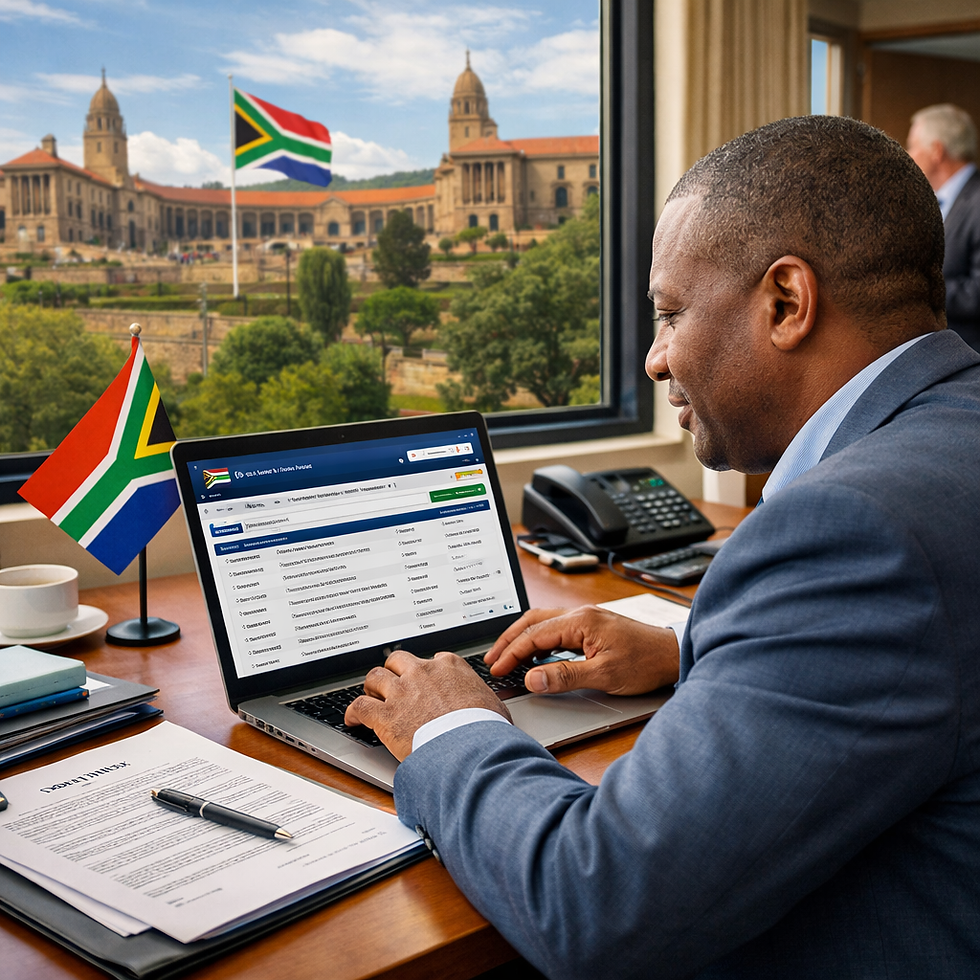
The sheer scale of opportunities is hard to ignore. As of mid-September 2026, one live bulletin site reported an impressive 2,301 open tenders, with other sources in August indicating similar numbers, hovering around 1,800 to 2,000 active solicitations. This volume underscores a robust and active procurement market. Whether you're a seasoned bid manager or an export manager exploring new territories, grasping the nuances of South Africa's tender ecosystem is your first step towards securing a piece of this substantial pie.
Understanding South Africa's E-Procurement Hub in 2026
At the heart of South Africa's government procurement system is the National Treasury eTenders portal. This isn't just another website; it's the official gateway for all government tender opportunities. If you're looking to engage with South African state entities, this portal, found at www.etenders.gov.za , should be your primary destination. The government's own tenders page explicitly directs users here, solidifying its role as the central repository for all things procurement.
I’ve spent countless hours sifting through tender portals across the globe, and I can tell you that a centralized system like this is invaluable. It streamlines the search process and ensures that all potential bidders have equal access to information. What's particularly useful for planning is the portal's procurement plans page, which is already populated with 2026 entries. This isn't just a list of past contracts; it includes envisaged advert dates, closing dates, and even award dates for upcoming procurements. For instance, the planned repairs and renovations for the Oudtshoorn Magistrate’s Office, requiring both Mechanical Engineer and Architect services, show anticipated advert dates in mid-September 2026, with closing dates in October. Similarly, South African National Parks is looking to appoint a service provider for disability inclusion training, with an advert date of September 1, 2026, and an award date stretching into March 2027. These forward-looking insights are gold for strategic planning.
Navigating the National Treasury eTenders Portal
Once you're on the eTenders portal, you’ll find a wealth of information. Beyond the procurement plans, you’ll see live tender listings. For example, National Treasury tender NT011-2026, for the “Appointment of a service provider for provision of refreshments and kitchen cleaning materials,” has a closing date of September 7, 2026, at 11H00. This level of detail – the tender number, description, and exact closing time – is standard. You'll need to register on the portal to access full tender documents, often in PDF format, and to submit your bids. The registration process typically involves providing company details, tax compliance information, and sometimes proof of specific accreditations. It's a fundamental step that you shouldn't leave until the last minute.
When you're searching, remember to use keywords relevant to your business. The portal’s search functionality allows you to filter by department, sector, and closing date. And if you want to stay ahead of the curve, services like TendersGo, with its extensive database covering 220+ countries and 145 languages, can provide AI summaries, unlimited alerts, and advanced CPV/NAICS code searches, helping you pinpoint relevant opportunities even faster. A free 30-day trial is often available, allowing you to test the waters.
The Evolving Legal Framework: Public Procurement Act, 2024
South Africa's procurement landscape in 2026 is significantly shaped by the Public Procurement Act, 2024 (Act 28 of 2024). This legislation is the bedrock of current government procurement, and understanding its implications is non-negotiable for anyone serious about bidding. We’re currently seeing the practical implementation of this Act through new draft regulations. The draft General Public Procurement Regulations, 2026, for instance, were published under section 63(1) of this very Act.
What does this mean for you? It means that the rules of engagement are being refined, and staying informed about these changes is paramount. These regulations dictate everything from bidding procedures to evaluation criteria. Alongside the general regulations, the draft Public Procurement Tribunal Regulations, 2026, have also been published for public comment. This tribunal is designed to handle disputes and ensure fairness in the procurement process, providing an important mechanism for recourse should any issues arise during a tender.
Key Regulatory Updates and Public Comment Opportunities in 2026
The year 2026 has been a period of significant consultation regarding these new regulations. The draft Public Procurement Tribunal Regulations had a public comment deadline of May 15, 2026, while the draft General Public Procurement Regulations had a deadline of June 15, 2026. However, a later Gazette notice extended the window for written comments on the draft General Public Procurement Regulations, allowing submissions within 60 days after the notice date. This extension indicates the government's commitment to thorough public input, and it also means that the final versions of these regulations might still be taking shape.
For those interested in contributing to the policy-making process or simply understanding the proposed changes in detail, knowing where to submit comments is key. The email address for feedback on the draft General Public Procurement Regulations is DraftGeneralProcurementRegulations@treasury.gov.za , and for the draft Public Procurement Tribunal Regulations, it's DraftTribunalRegulations@treasury.gov.za . While the official comment periods may have passed for some, reviewing these draft documents provides invaluable insight into the government's priorities and expected compliance standards. It's not just about what's published today, but what’s coming down the pipeline.
Navigating BEE and Localisation Requirements
South Africa’s procurement policies are not solely about obtaining goods and services; they are also powerful tools for economic transformation and social development. This is where Broad-Based Black Economic Empowerment (BEE) and localisation requirements come into play, and in 2026, these aspects are seeing significant updates. Reports indicate that new draft regulations are proposing stringent requirements: firms bidding for government work must demonstrate that at least 40% of their previous procurement spend went to majority black-owned and managed enterprises. Additionally, there's a proposed requirement to subcontract a minimum of 30% of the contract value to South African citizens.
These aren't mere suggestions; they are becoming integral to tender evaluation. For international companies, this means forging robust partnerships with local, compliant businesses. For local firms, it highlights the importance of maintaining strong BEE credentials and actively participating in local supply chains. I’ve seen many international companies struggle in South Africa because they underestimated the depth of these requirements. It’s not just a box-ticking exercise; it's about genuine commitment to local empowerment and development.
Practical Implications for Your Bid Strategy
So, how do you incorporate these requirements into your bid strategy? Firstly, understand your own BEE score and ensure it's up to date. If you're an international entity, explore joint ventures or consortia with local, BEE-compliant partners early in your tender preparation. This isn't just about meeting a quota; it often brings invaluable local knowledge and networks to your project.
Secondly, when preparing your budget and work breakdown structure, explicitly detail how you will meet the 30% subcontracting requirement to South African citizens. This might involve identifying potential local subcontractors even before the tender is released, building relationships, and understanding their capabilities. Procurement officers are looking for concrete plans, not vague promises. Your bid needs to clearly articulate how you contribute to the broader economic objectives of the country, not just the technical specifications of the contract.
The Public Procurement Amendment Bill and Future Outlook
Beyond the regulations currently being finalized, there's another piece of legislation that could significantly impact the procurement landscape: the Public Procurement Amendment Bill. This Bill was published in 2026, and its text explicitly states that it will come into operation on a date determined by the President by proclamation in the Gazette. This means that while it's not yet active, it represents a future shift that bidders need to monitor closely.
Such legislative amendments often introduce new principles, update existing definitions, or refine compliance mechanisms. The fact that it's awaiting presidential proclamation suggests that its implementation is a matter of 'when,' not 'if.' Keeping an eye on government gazettes and official announcements will be essential for staying ahead of these potential changes. A proactive approach to understanding upcoming legislation can give you a significant competitive edge.
Preparing for Future Procurement Changes
What should you do in anticipation of such changes? Firstly, subscribe to official government publications and news feeds from the National Treasury. Secondly, regularly consult legal experts specializing in South African public procurement. Thirdly, consider utilizing platforms like TendersGo, which often track legislative developments and provide updates relevant to procurement professionals. With its B2B marketplace and saved search functionalities, it helps you remain informed about changes impacting your specific industry or region.
The essence of successful bidding in South Africa, as in many dynamic markets, is continuous learning and adaptation. The procurement officials I've interviewed over the years consistently emphasize the importance of bidders demonstrating not just technical competence, but also a deep understanding of the local context and regulatory framework. It’s about showing you’re a reliable partner, not just a service provider.
Documents and Compliance for Bid Submission
Submitting a compliant bid in South Africa requires meticulous attention to detail and a thorough understanding of the required documentation. It’s not just about filling out forms; it’s about presenting a complete and accurate picture of your company's capabilities and compliance. Failure to submit even a single required document can lead to disqualification, regardless of the quality of your technical proposal.
Common documents typically requested include:
Company Registration Documents: Proof of registration with the Companies and Intellectual Property Commission (CIPC).
Tax Clearance Certificate: Issued by the South African Revenue Service (SARS), demonstrating tax compliance. For foreign companies, specific tax arrangements may apply, and you'll need to confirm these with SARS or a local tax advisor.
B-BBEE Certificate/Sworn Affidavit: Essential for demonstrating your Broad-Based Black Economic Empowerment status. This is a critical component for evaluation.
Proof of Good Standing with the Unemployment Insurance Fund (UIF) and Compensation Fund (COIDA): Demonstrating compliance with labour laws.
Financial Statements: Audited financial statements for a specified number of years, proving financial stability.
References and Track Record: Evidence of previous similar work, often with contactable references.
Technical Proposal: Detailing your approach, methodology, and resources for the project.
Pricing Schedule: A detailed breakdown of costs, adhering to the specified format.
Declaration of Interest: A form disclosing any potential conflicts of interest.
Standard Bidding Documents (SBDs): A series of standardized forms (e.g., SBD 1, SBD 4, SBD 6.1, SBD 8, SBD 9) that are mandatory for most government tenders. These cover aspects like invitation to bid, declaration of interest, preference points claim form, declaration of bidder's past supply chain management practices, and certificate of independent bid determination.
Each tender will specify its unique set of requirements, but these form the core. Always download the full tender document and go through it line by line. I’ve seen bids rejected for something as simple as an unsigned declaration form, so attention to every detail truly matters.
Ensuring Bid Compliance and Submission Readiness
Beyond gathering the documents, their format and submission method are equally important. Most bids are now submitted electronically via the eTenders portal. This means ensuring your documents are in the correct file type (usually PDF), properly named, and within specified size limits. Some tenders may still require physical submission, but this is becoming less common. Always confirm the submission method well in advance.
The local procurement culture in South Africa, while increasingly digitized, still values clear, concise, and well-structured proposals. Language is primarily English, but understanding local terminology and context can be beneficial. Consider engaging local consultants or legal counsel to review your documentation, especially if you are new to the South African market. This small investment can save you from significant headaches and potential disqualifications down the line. Remember, the deadline is sacrosanct. The clock on the eTenders portal is the final authority, and a submission even a minute late will almost certainly be rejected.
For those looking to streamline their tender search and management, TendersGo offers powerful tools. Its ability to provide AI summaries of complex tender documents, coupled with unlimited alerts for new opportunities matching your profile, can significantly reduce the administrative burden. The platform’s support for 145 languages and its extensive CPV/NAICS code search capabilities mean you won’t miss an opportunity, no matter where it's advertised or what specific classification it falls under. Plus, the ability to view PDFs directly and manage saved searches makes it a comprehensive solution for any serious bidder.
As South Africa continues to refine its public procurement system in 2026, driven by new legislation and a strong focus on economic inclusivity, businesses that stay informed and adapt their strategies will be best positioned for success. The opportunities are plentiful, but they demand diligence, compliance, and a genuine understanding of the national agenda.


